Interior painting and color
Accent walls in Atlanta, painted dark, two-tone or paneled
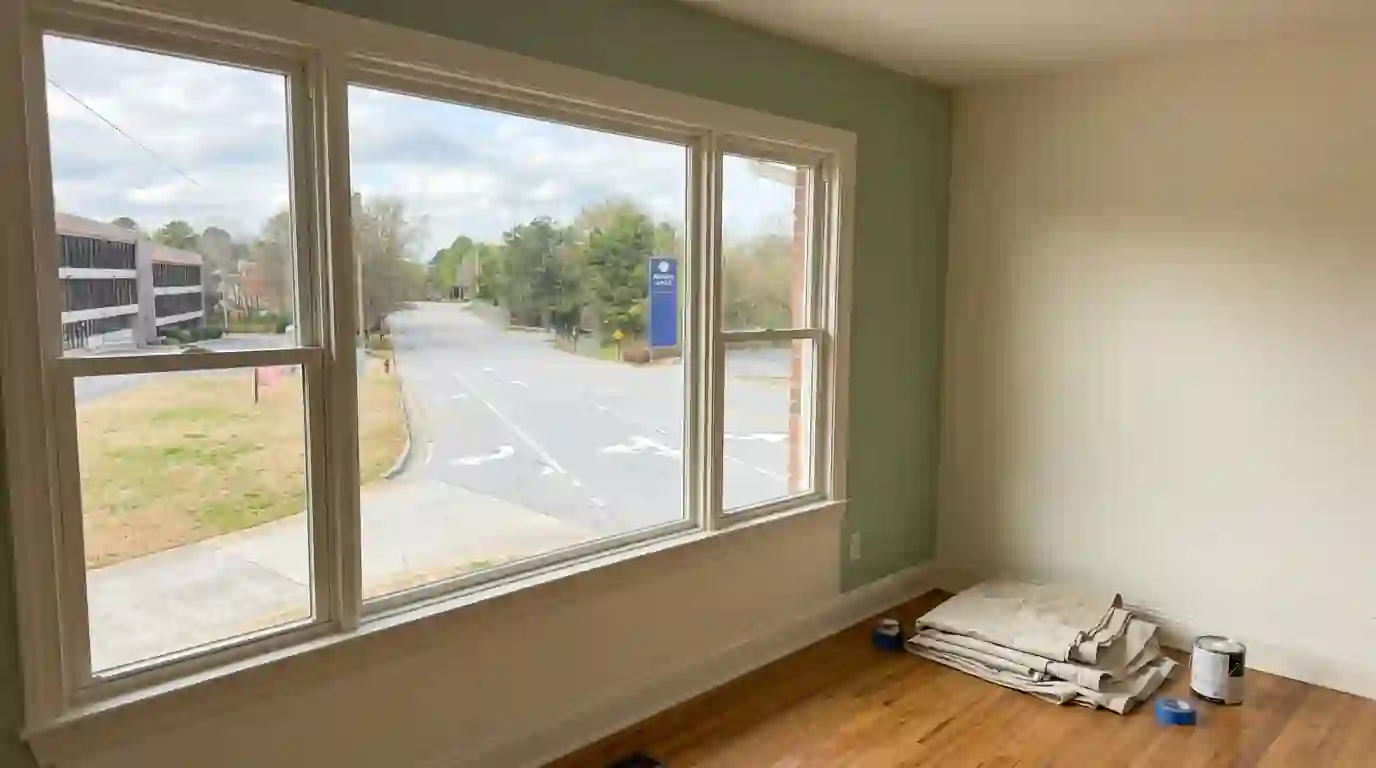
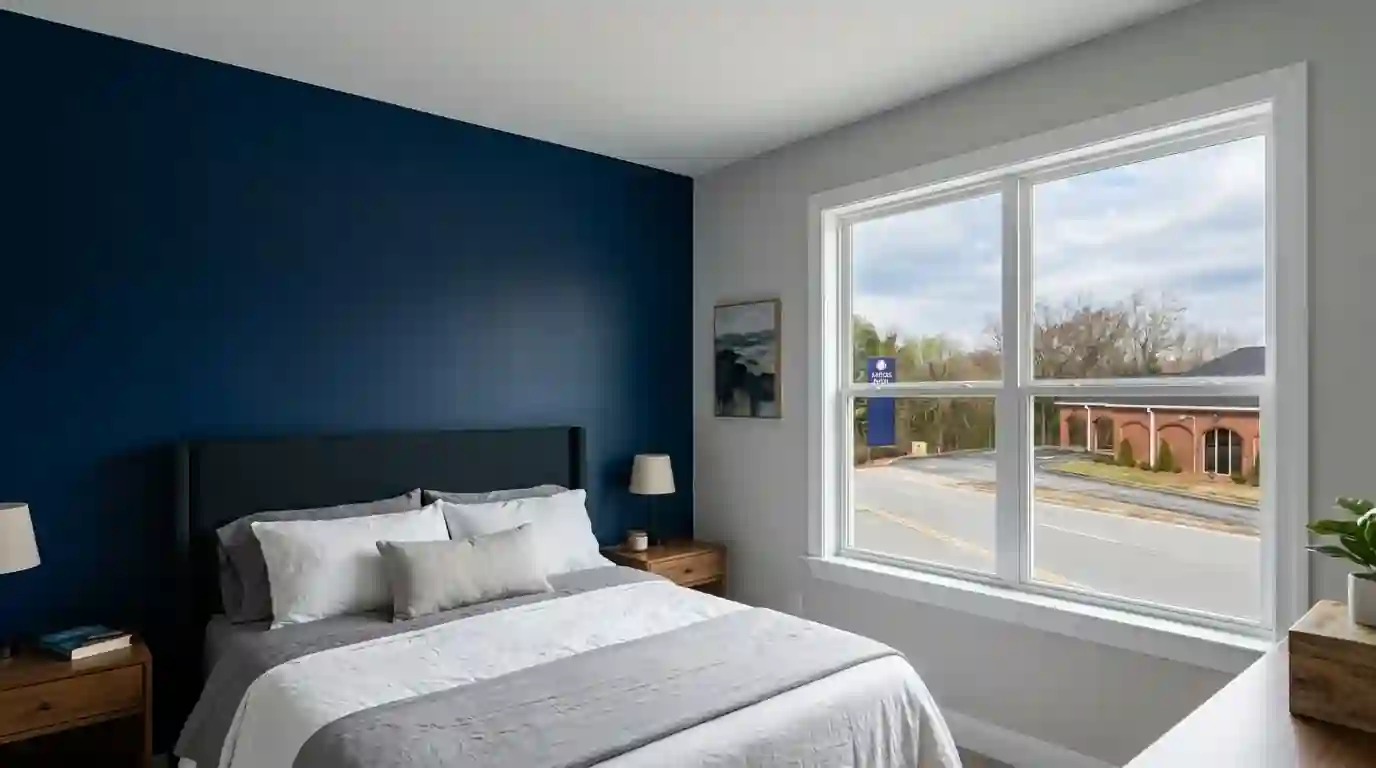
Deep green behind the bed, navy around the fireplace? We paint accent walls across Atlanta with straight edges where the color stops and even coverage in saturated colors.
Phones answered 24 hours a day, 7 days a week
- Phones answered 24/7
- Scheduled from Tucker
- Interior painting and color
Updated October 2026
Short answer
An accent wall in Atlanta is usually priced as a small interior job. For context, Angi's 2026 Atlanta data puts interior painting at $2 to $4.50 per square foot, though one wall often falls under a painter's job minimum. Dark colors cost more in time than paint: tinted primer and an extra coat. Call and describe the wall.
Where accent walls go wrong and how we avoid it
One wall in a strong color looks deliberate when the edges are straight and the coverage is even. It looks like a mistake when color bleeds onto the ceiling, stops at an awkward point, or dries blotchy because a deep base went on too thin.
We pick the wall with you, usually the one your eye lands on first, then seal the edges, prime gray or tinted under deep colors and roll two or three coats.
What drives the price
What a single accent wall costs to paint well
One wall is a small job, so setup is a bigger share of the price. The Angi figure below covers interior painting in general, not accent walls alone.
Published range: $2 to $4.50 per square foot. Source: Angi, Atlanta interior painting data updated July 2026. A planning figure, not our quote.
Color depth
Deep colors need tinted primer and often a third coat.
Design
Color blocks, arches and bands add measuring, taping and hand cutting.
Wall height
A stairwell or two-story wall needs taller setup.
Wall condition
Dark finishes show patches, so repairs get more sanding and primer.
Boards and molding
Board-and-batten seams and nail holes take time to fill and caulk.
Dark and saturated colors
Navy, forest green, charcoal and deep terracotta are popular accent colors and the hardest to get even. Deep-base paints hold less of the white pigment that gives paint its hiding power, so they rely on extra coats and a primer tinted toward the final color. We roll in consistent passes and keep a wet edge, because dark flat and matte finishes show lap marks and touch-ups more than light colors. Matte or eggshell hides wall flaws best; higher sheens in dark colors show every roller pass.
Two-tone and color-block walls
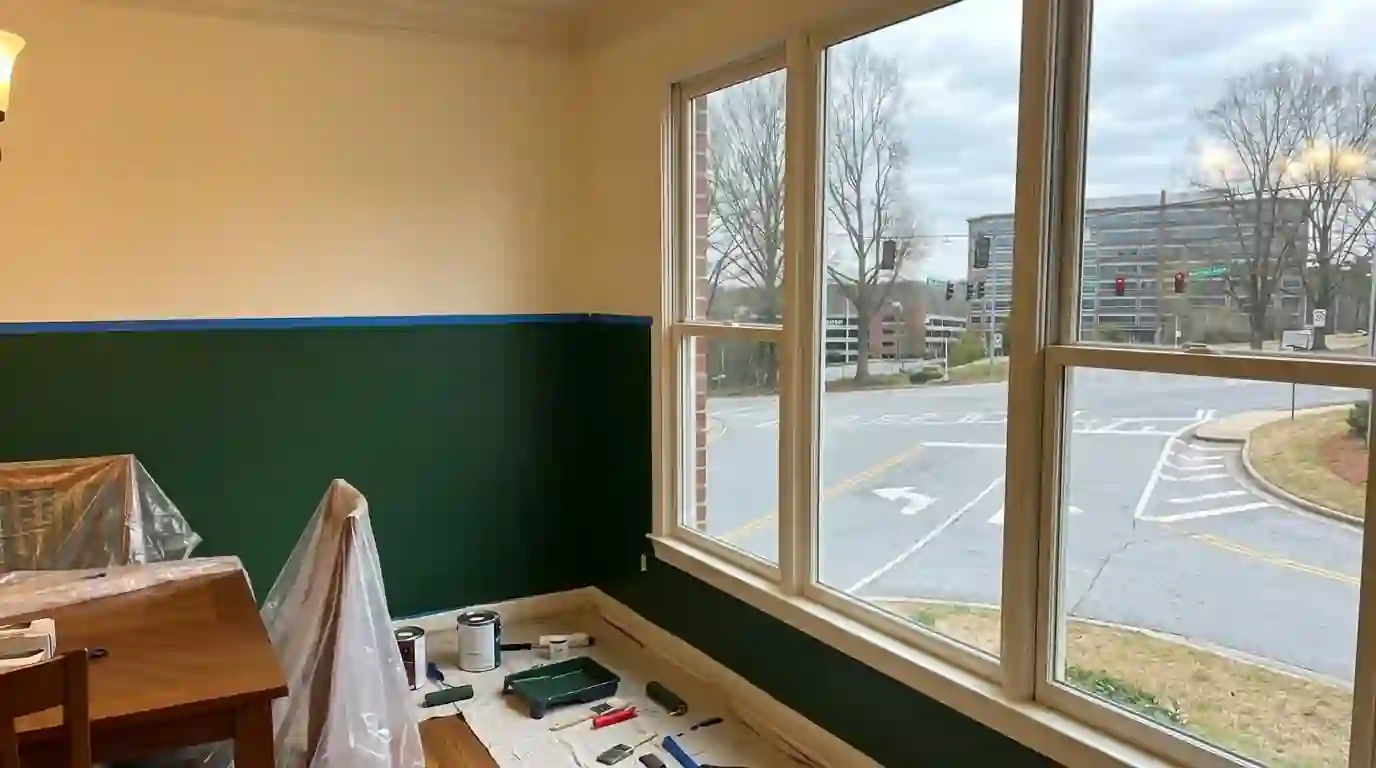
Two-tone walls split horizontally, often at chair-rail height, with the darker color below. Color blocking goes further: an arch behind a bed, a painted rectangle framing a desk, a band that wraps a corner. We mark the line with a laser level, tape it, then seal the tape edge with the base color so any bleed matches the wall underneath. The second color goes over that, and the tape comes off while the paint is still slightly soft. Curves are drawn with a string compass and cut by hand.
Wainscot and board-and-batten walls
Board-and-batten, picture-frame molding and beadboard wainscot give a wall depth that flat paint cannot. Once the boards are up, we fill every nail hole, caulk each seam where board meets wall and paint the whole assembly as one surface, often in satin or semi-gloss so it wipes clean. One dark color over boards and wall reads modern; white panels under a colored upper wall reads traditional. Seams take the most time, because an unfilled gap shows as a dark shadow line once color is on, and paint cannot hide it afterward.
Saturated colors mix best in Benjamin Moore, Sherwin-Williams and PPG deep bases, and we can work from a Farrow & Ball or Behr color you already chose.
- Benjamin Moore
- Sherwin-Williams
- PPG
- Behr
- Valspar
- Glidden
- Farrow & Ball
- Dunn-Edwards
- Zinsser
- Kilz
Around Atlanta
Accent walls in Tucker ranch and split-level homes
Much of Tucker's housing went up in the boom after World War II, and those 1950s to 1970s ranches and split-levels shape where an accent wall works. Ranches often have a long living room wall or a brick fireplace wall that suits a deep color. Split-levels have half-flights of stairs where one wall rises past two levels, a strong spot for color that needs planks to reach. Old den paneling can take paint too, once its glossy finish is sanded and primed.
How the job runs
Sample, mark, paint: an accent wall in five steps
Pick the wall and color
Large samples go up so you judge them in your own light.
Prep the surface
Holes and dents are filled, sanded flush and spot primed.
Mark and tape
Lines are leveled, taped and sealed so the edge stays crisp.
Prime and coat
Tinted primer first, then two or three coats of color.
Pull tape and check
Tape comes off while the paint is slightly soft, and edges get a final touch.
Do it yourself or hire it out
Accent wall steps you can do yourself
An accent wall is a common first painting project. These are the spots where it tends to go sideways.
| Task | Doing it yourself | When to call a painter |
|---|---|---|
| Rolling a light or mid-tone color | Very doable with good tape and two coats. | When the wall is tall or runs beside stairs. |
| Navy, black or deep green | Often streaky without tinted primer and a third coat. | When you want even color with no lap marks. |
| Crisp lines for color blocks | Tape bleed is the usual problem on textured walls. | When the design has curves or wraps a corner. |
| Picking the color | Store chips look very different across a whole wall. | When you want large samples tested in your light. |
Questions
Accent Wall Painting questions we hear in Atlanta
Usually the first wall you see entering the room. Walls broken up by windows and doors make weaker accents.
Not always. In matte, a dark wall can make a room feel deeper. A large sample tells you more than a chip.
Plan on tinted primer and two coats, sometimes three.
Yes. Going back to a light color takes primer and two finish coats.
Some people wrap it across trim or onto the ceiling. We can sample both ways.
Yes. The other walls go first, then the accent wall is taped off and painted last.
Same kind of work
More interior painting and color
Interior House Painting
Walls, ceilings and trim, one room or the whole house.
Ceiling Painting
Flat, vaulted and stained ceilings rolled without lap marks.
Trim, Baseboard & Door Painting
Baseboards, casing and doors in a hard, wipeable enamel.
Bathroom Painting
Moisture-ready coats for walls, ceilings and vanities.
Ready when you are
Thinking about one wall in a bold color?
Name the room and the color you are leaning toward, and we will bring large samples to try on the wall.