Walls, ceilings and repairs
Wallpaper removal in Atlanta, with the walls left ready to paint
Seams curling, a border from another decade? Getting the paper off is half the job. The other half is getting the paste off and fixing whatever the paper was hiding.
Phones answered 24 hours a day, 7 days a week
- Phones answered 24/7
- Scheduled from Tucker
- Walls, ceilings and repairs
Updated October 2026
Short answer
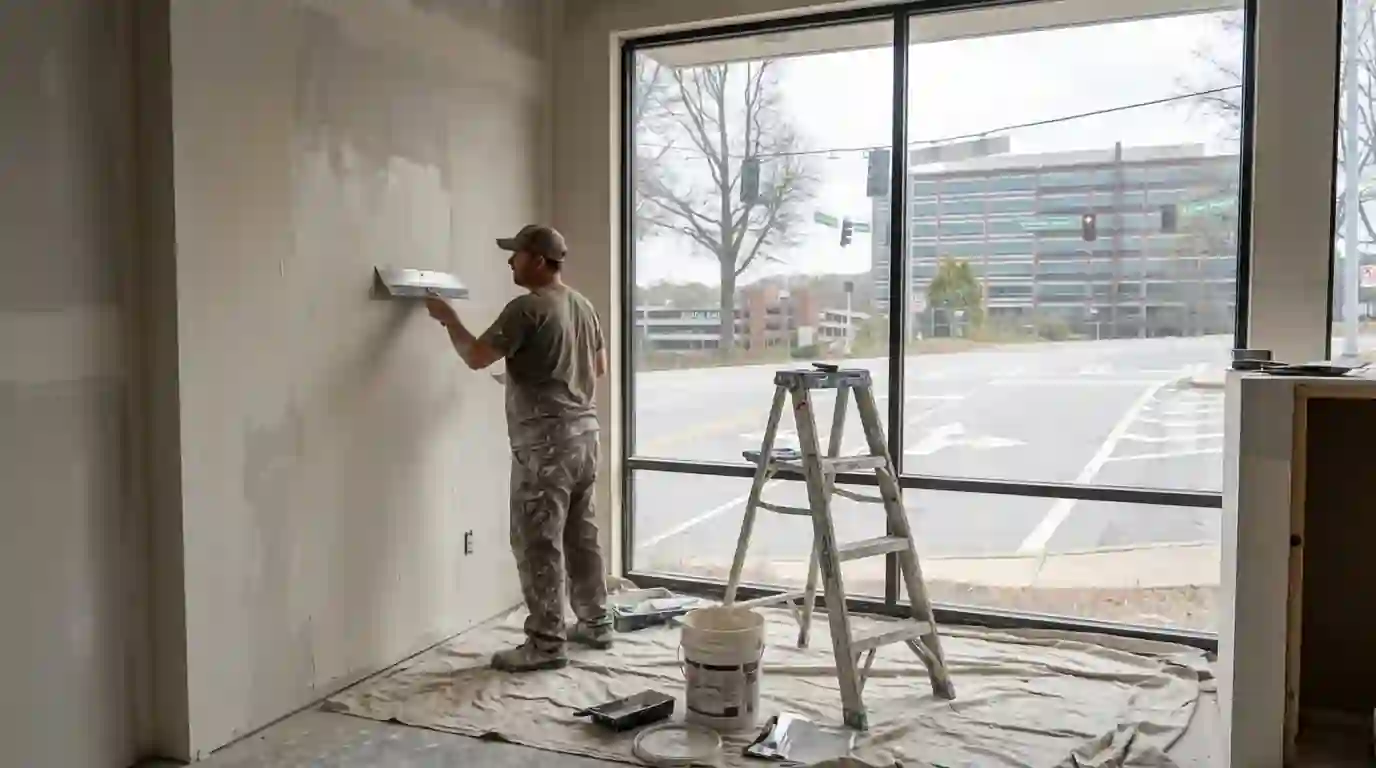
Wallpaper removal in Atlanta typically costs about $530 to $1,506 based on 2026 figures for nearby Duluth, GA, and the price depends on how the paper was hung more than how much there is. Strippable paper peels off dry. Paper hung on unprimed drywall takes slow soaking and often a skim coat before paint.
Why removal is mostly about what the paper leaves behind
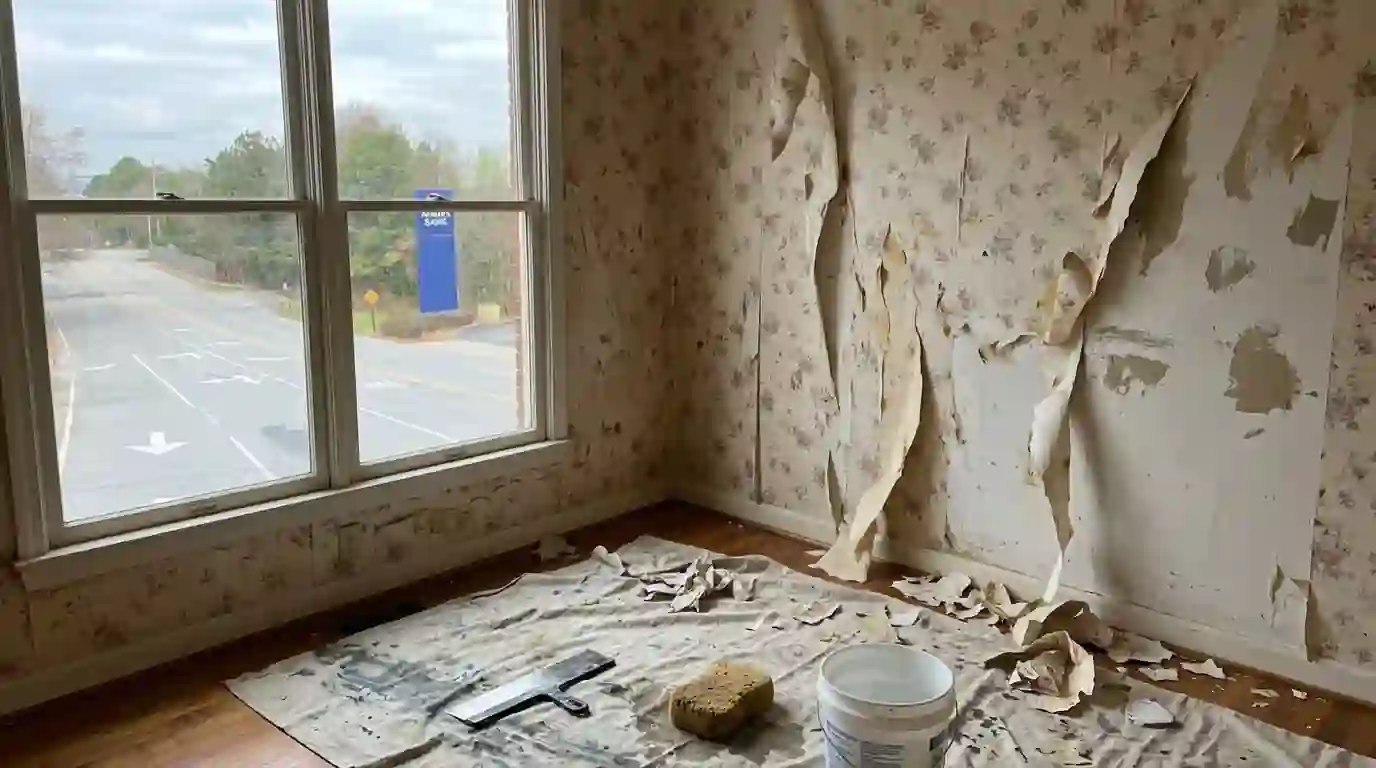
Most wallpaper comes off in layers: a printed face, a paper backing and the paste beneath both. Pulling the face is quick. Soaking off the backing and washing away every trace of paste is where the hours go, and it decides whether new paint lasts, because leftover paste reactivates under water-based paint and shows up as cracks, wrinkles or bubbles.
With the paste gone, we check the wall under raking light, repair tears and dents, and prime with a product made to lock down residue.
What drives the price
Why wallpaper jobs are priced by paper type, not room size
The paper and the wall underneath matter more than square footage.
Published range: $530 to $1,506 in Duluth, GA. Source: HomeYou, August 2026. A planning figure, not our quote.
Type of paper
Strippable peels; vinyl leaves backing; painted paper resists water.
Number of layers
Each extra layer adds another round of soaking.
What is underneath
Unprimed drywall tears; plaster soaks well but may need patching.
Room size and height
Stairwells and two-story walls need ladders or planks.
Repairs after
Torn paper, gouges and skim coats add time before primer.
Strippable and vinyl papers
Strippable papers are made to come off, and many peel away dry in full sheets once a corner is lifted. Vinyl-faced papers split instead: the vinyl face pulls free and a paper backing stays on the wall. That backing soaks up warm water with a little remover and scrapes off with a wide knife. Peel-and-stick papers leave adhesive rather than paste and need a cleaner instead of water. All three are the quick end of this work, as long as the walls were primed before papering. Most of the time goes into washing afterward.
Paper on unprimed drywall
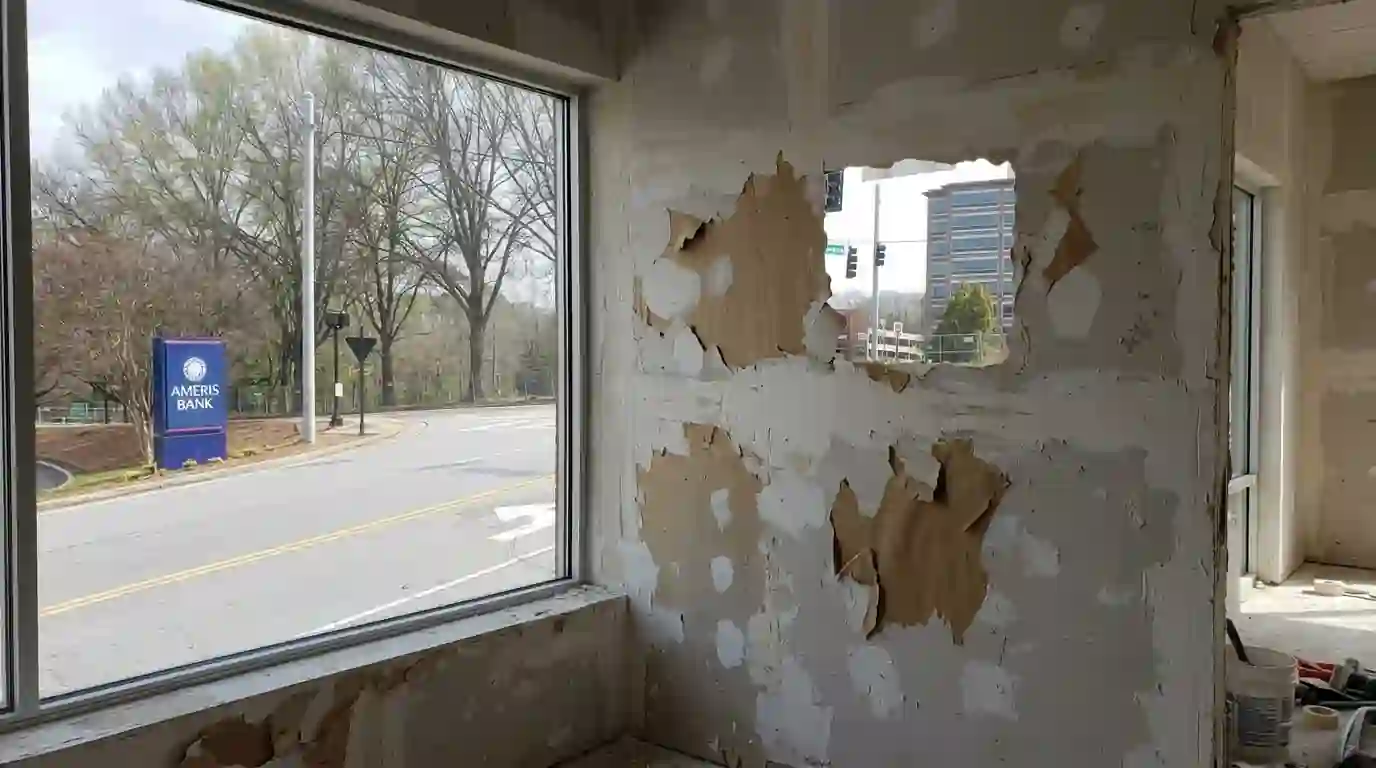
Paper hung straight onto bare drywall is the hard case. The paste soaks into the drywall's own paper face, so soaking the wallpaper softens the wall surface too, and heavy scraping tears the brown face paper away in patches. We soak small sections, scrape with a flexible blade held low and stop the moment face paper starts coming with it. Torn spots are sealed with an oil-based or shellac primer before any compound, since water-based compound over torn paper makes it bubble. Expect some skim coating on walls like these.
Wall repair after removal
With paper and paste gone, the wall usually needs work before paint. Anchor holes from old shelves, gouges from scraping and torn face paper are filled or sealed. Where damage covers a whole wall, a skim coat is faster and flatter than dozens of spot patches. We sand, check the surface with a light held flat against it and prime. A border or chair-rail band of paper often leaves a ridge or a color line where it sat, and we feather that out so it does not ghost through the new paint.
What the job includes
What a finished removal job should leave you with
Before anyone calls the walls ready, these should be done:
- Floors, trim and outlets protected
- All paper and backing removed
- Paste washed off and rinsed
- Torn face paper sealed with oil or shellac primer
- Holes and gouges filled
- Skim coat where damage is spread out
- Walls checked with a work light
- Every wall primed with a paste-sealing primer
Around Atlanta
Layered paper on plaster in Druid Hills houses
Neighborhoods like Druid Hills, with houses from the late 19th and early 20th century and a historic district on the National Register since 1979, are where removal gets interesting. Houses that age often have plaster under several papers, some painted over. Plaster tolerates soaking better than drywall, but the paper may be all that holds loose plaster in place, so as each layer comes off we tap for hollow spots and add plaster patching to the scope where it is needed.
How the job runs
How we take a room from papered to primed
Test a corner
A lifted seam shows the paper type, the layers and the wall underneath.
Protect the room
Floors covered, outlets taped, furniture moved or wrapped.
Strip and soak
Faces are peeled; backing is soaked and scraped section by section.
Wash and repair
Paste is washed off, torn paper sealed, damage filled or skimmed.
Prime and paint
A paste-sealing primer, then paint if it is in the scope.
Do it yourself or hire it out
What you can strip yourself, and what to hand off
Wallpaper removal is one of the most common do-it-yourself jobs, and it usually goes wrong at the paste and the torn spots.
| Task | Doing it yourself | When to call a painter |
|---|---|---|
| Peeling strippable paper | Easy: lift a corner and pull slowly at a low angle. | Only if the wall underneath turns out damaged. |
| Soaking off backing | Doable with warm water, a sponge and patience. | Large rooms, stairwells or several layers. |
| Washing off paste | Often skipped, which is why paint cracks later. | When the new paint has to hold for years. |
| Repairing torn face paper | Water-based compound bubbles over it. | Any torn area bigger than your hand. |
Questions
Wallpaper Removal questions we hear in Atlanta
Over well-stuck paper with an oil-based primer, yes, but seams tend to show and later removal gets harder.
Lift a corner and pull. If it comes off whole, it is strippable; if a paper layer stays behind, it is vinyl with a backing.
Some damage is common on unprimed drywall, and repairing it is part of the job.
Yes. Bathrooms are small but fiddly, with paper behind toilets and around vanities.
Yes. Most jobs end with primer and two coats of paint.
They come off the same way, and we feather out the ridge they leave.
Same kind of work
More walls, ceilings and repairs
Drywall Repair & Patching
Holes, nail pops, seams and water-damaged board.
Popcorn Ceiling Removal
Scraped, skimmed and repainted flat ceilings.
Skim Coating & Wall Smoothing
Textured or torn walls made smooth for paint.
Plaster Wall Repair
Cracked and loose plaster patched to match.
Ready when you are
Tired of the paper on your walls?
Tell us which rooms, how many layers you suspect and roughly how old the house is. Somebody picks up the phone at every hour, and we will book a time to see the walls.