Cabinets and woodwork
Interior wood staining around Atlanta, from trim to ceiling beams
Stain shows every shortcut: blotchy pine, lap marks across a door, trim two shades off from the casing beside it. We stain from test boards you approve, then seal the wood under clear coats.
Phones answered 24 hours a day, 7 days a week
- Phones answered 24/7
- Scheduled from Tucker
- Cabinets and woodwork
Updated October 2026
Short answer
For interior wood staining in Atlanta, the result depends on prep more than the stain itself: sanding every piece to the same grit, conditioning soft woods like pine and approving a test board made from your own lumber. We stain trim, doors, built-ins, beams and paneling, new or old, and finish each piece with at least two clear coats.
Getting stain to look the same on every piece
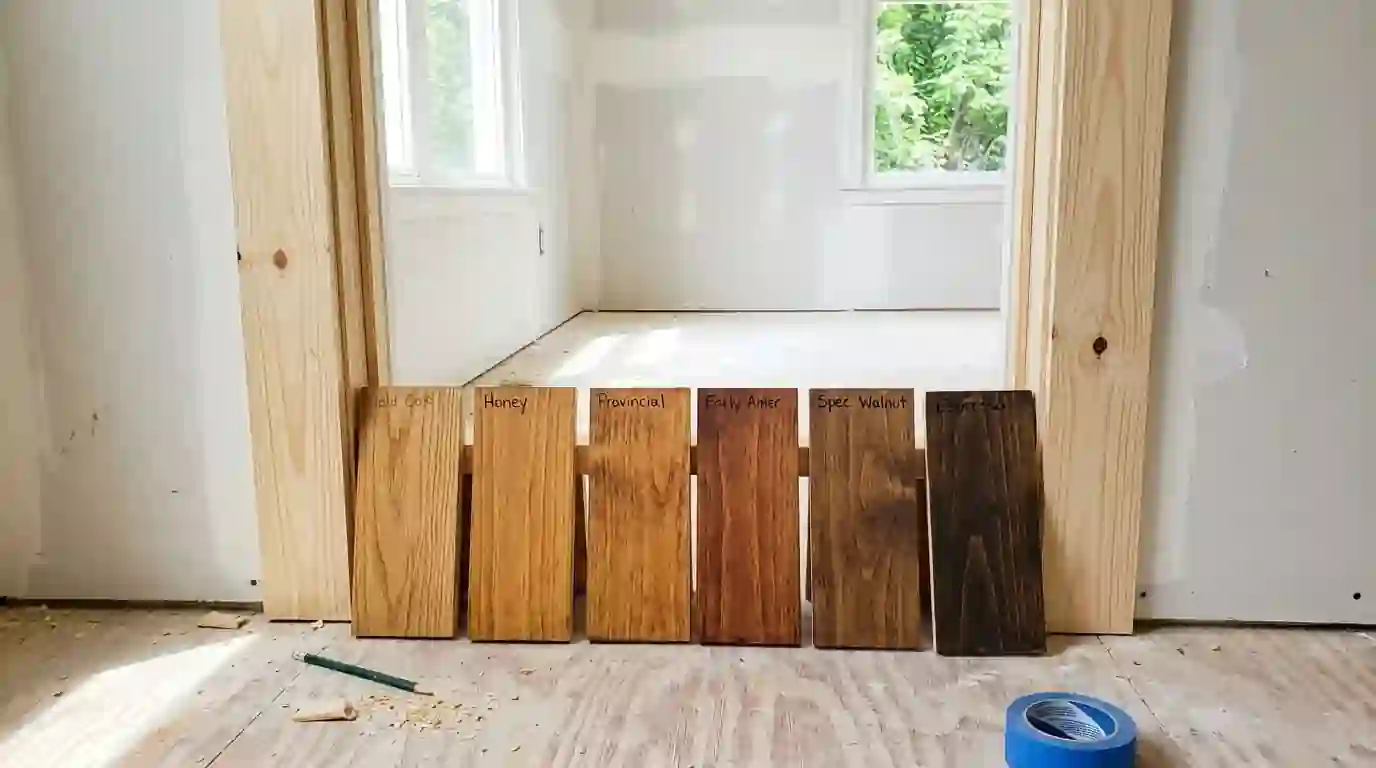
Stain soaks in instead of sitting on top, and every board drinks it differently. New pine casing blotches, poplar can turn greenish, and a door and its trim can come out two shades apart from one can. Most of the craft is controlling that: one sanding grit on every piece, conditioner or gel stain on soft woods, and test boards cut from your own lumber.
Stain alone protects almost nothing, so each piece gets clear coats in the sheen you choose. Waterborne clears keep pale colors true; oil-based finishes add an amber warmth that suits some woods and fights others.
What drives the price
What decides the cost of a staining job
Staining is priced by the piece and the hour, and no published local range fits it well. These five factors move the number most.
New wood or an old finish
Bare trim stains quickly; restaining means stripping or scuffing first.
Wood species
Pine, maple and cherry need conditioner or gel stain to avoid blotching.
Doors on or off
Doors stained flat look better and take more handling.
Clear coats and sheen
Each extra coat adds a dry cycle and a light sanding.
Height and access
Beams and plank ceilings need scaffolding and slow overhead work.
Stained trim and doors
New trim packages are where staining succeeds or fails. Pine blotches without conditioner and poplar takes stain unevenly, so we may suggest painting paint-grade trim and staining only stain-grade oak or maple. Doors come off their hinges and are stained flat on sawhorses, which prevents runs and lets every face and edge be coated. Nail holes are filled after staining with tinted putty, since filler under stain shows as a pale dot. When new trim meets older stained trim, we tone the new wood to the old, not to a store chip.
Built-ins and shelving
Bookcases, window seats, mudroom lockers and office built-ins usually pair solid wood face frames with plywood boxes and shelves. Each takes stain differently, and edge banding differs again, so the sample has to include all three. Shelves are stained and coated on both faces and every edge so they gain and lose moisture evenly instead of cupping. Shelf pin holes are cleared of finish afterward so the pins still fit, and interiors can go a sheen lower than the face frames if you plan to display things against them.
Beams and paneling
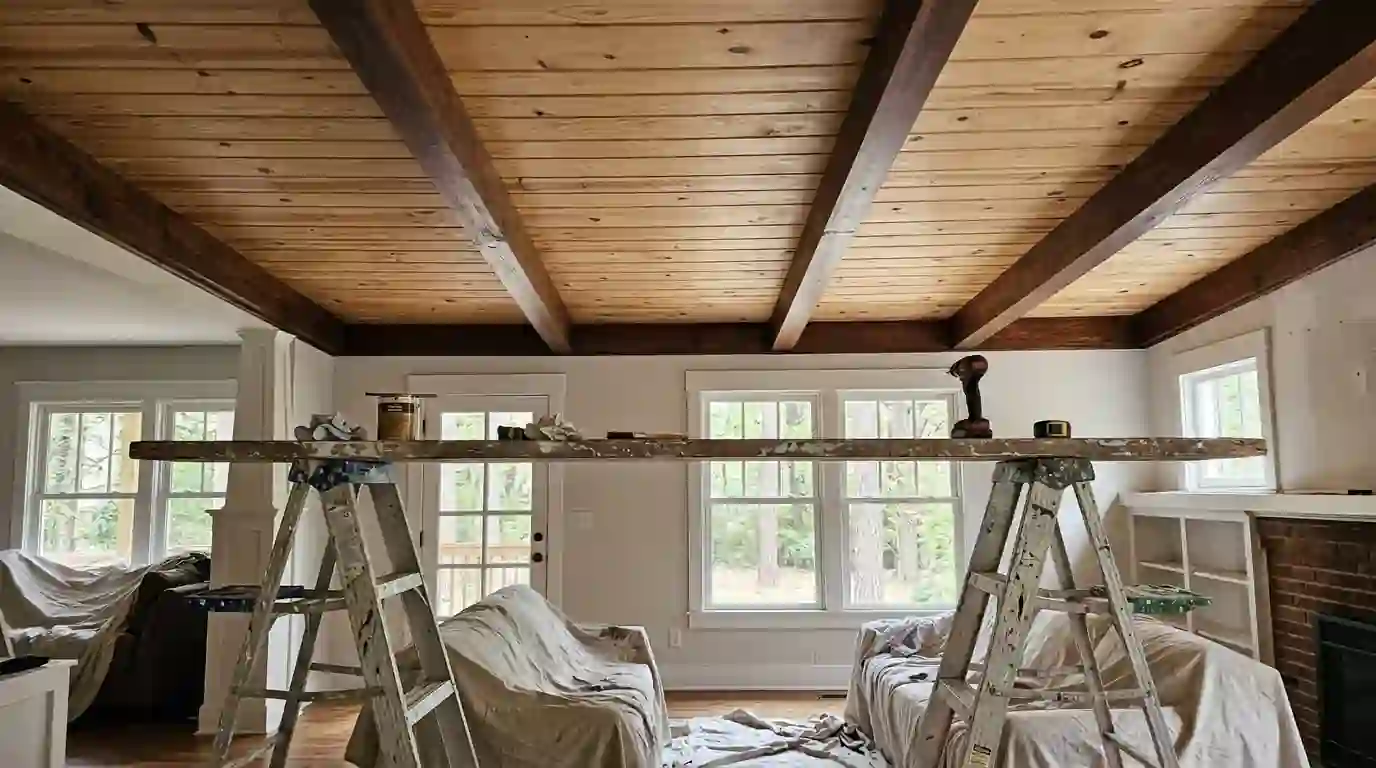
Ceiling beams and tongue-and-groove ceilings move the work overhead, which changes the method. Liquid stain drips, so we use gel stain or apply liquid sparingly and wipe as we go, working from planks or scaffolding rather than a ladder. Box beams built from new lumber are toned to look even along their length. On paneling, the usual request is to take knotty pine or oak a shade deeper, or simply clean and recoat it. We work stain into tongue-and-groove joints first, so pale lines do not open when the boards shrink in winter.
Stains and clear coats come mostly from Minwax, General Finishes, Varathane and Old Masters, with Sherwin-Williams wood stains when a color has to be tinted to match.
- Minwax
- General Finishes
- Varathane
- Old Masters
- Sherwin-Williams
- Watco
- Cabot
- Zinsser
Around Atlanta
Cobb County oak and Atlanta humidity
In the Cobb County School District area, 58.2% of homes date from 1970 to 1999 (ACS 2019 to 2023). In houses that age, new doors or trim often have to sit beside stained wood that has darkened for decades, and toning the new wood to match is where most of the care goes. Damp air slows stain and varnish, and Atlanta mornings average 82% relative humidity, easing to 52% by afternoon (1961 to 1990 averages), so we run the air conditioning and wait out each coat.
How the job runs
From test board to final clear coat
Test boards
We stain offcuts of your wood and you approve one in the room.
Sand and condition
One grit on every piece; soft woods get conditioner.
Stain
Applied and wiped in sections so there are no lap marks.
Clear coats
Two or more, with a light sanding between them.
Fill and inspect
Tinted putty in nail holes, then a check in daylight.
Do it yourself or hire it out
Staining you can tackle yourself, and where it gets hard
Small staining jobs make a fair weekend project. Here is where the line falls.
| Task | Doing it yourself | When to call a painter |
|---|---|---|
| A few shelves or one door | Very doable with gel stain and a wipe-on clear coat on sawhorses. | When it has to match trim already in the room. |
| New pine trim | Use conditioner and test offcuts; pine blotches easily. | Whole-house trim, where color differences show room to room. |
| Darkening existing trim | Gel stain over a scuffed finish can work on short runs. | Long runs, cracked finishes or any move to a lighter color. |
| Beams and plank ceilings | Overhead stain drips and runs, and ladder work is slow. | Anything above step-stool height or over finished floors. |
Questions
Interior Wood Staining questions we hear in Atlanta
Not practically. Paint fills the grain, and stripping trim fully is rarely worth it; repainting usually wins.
Usually closely. We tone against the old trim, not a store chip, and show you a test piece.
Oil gives a deeper, warmer color and dries slower; water-based dries fast and keeps light colors from yellowing.
Yes, and we schedule around the other trades so the wood is stained before it gets handled.
Satin for trim and doors is the usual choice. Matte looks more natural on beams and paneling.
Very little. Door edges may want a fresh clear coat in time.
Same kind of work
More cabinets and woodwork
Kitchen Cabinet Painting
Doors and drawers off, sprayed smooth and rehung.
Cabinet Refinishing & Staining
Restain or recoat wood cabinets and keep the grain.
Staircase & Railing Refinishing
Treads, risers, banisters and balusters refinished.
Interior House Painting
Walls, ceilings and trim, one room or the whole house.
Ready when you are
Have bare wood waiting for color?
Let us know what kind of wood it is and roughly how much there is. We answer the phone around the clock and will set a time to make test boards.