Walls, ceilings and repairs
Skim coating for Atlanta walls and ceilings that need to be smooth
Texture hides flaws, but it also dates a room and collects dust. A skim coat is a thin layer of joint compound troweled over the entire wall, then sanded and primed, so paint goes onto a flat, even surface.
Phones answered 24 hours a day, 7 days a week
- Phones answered 24/7
- Scheduled from Tucker
- Walls, ceilings and repairs
Updated October 2026
Short answer
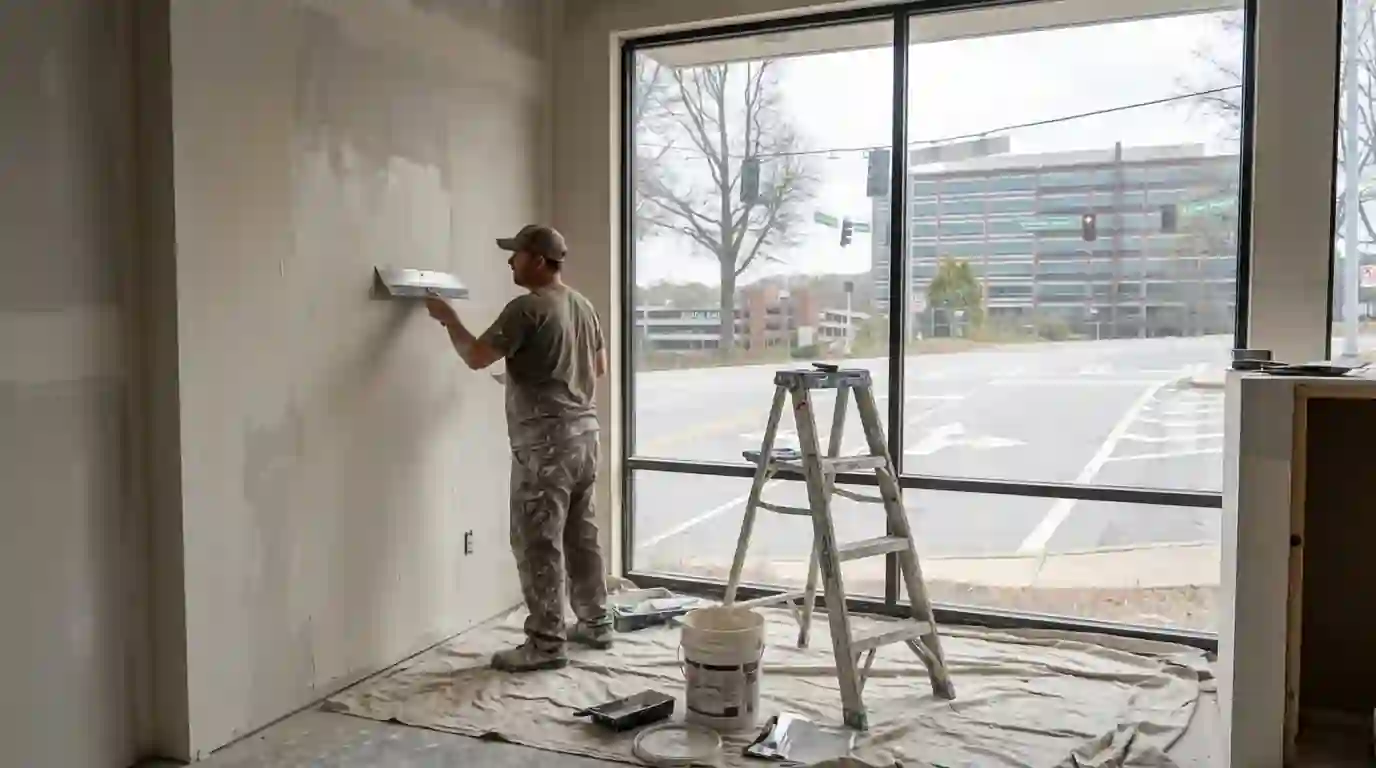
Skim coating an Atlanta wall buries orange peel, knockdown, torn paper or patchwork under thin coats of joint compound, which are then sanded and primed for paint. National data puts it at about $1.10 to $1.30 per square foot. Expect two or three coats, with drying time between each, and a check under raking light before primer.
What a skim coat can fix, and what it cannot
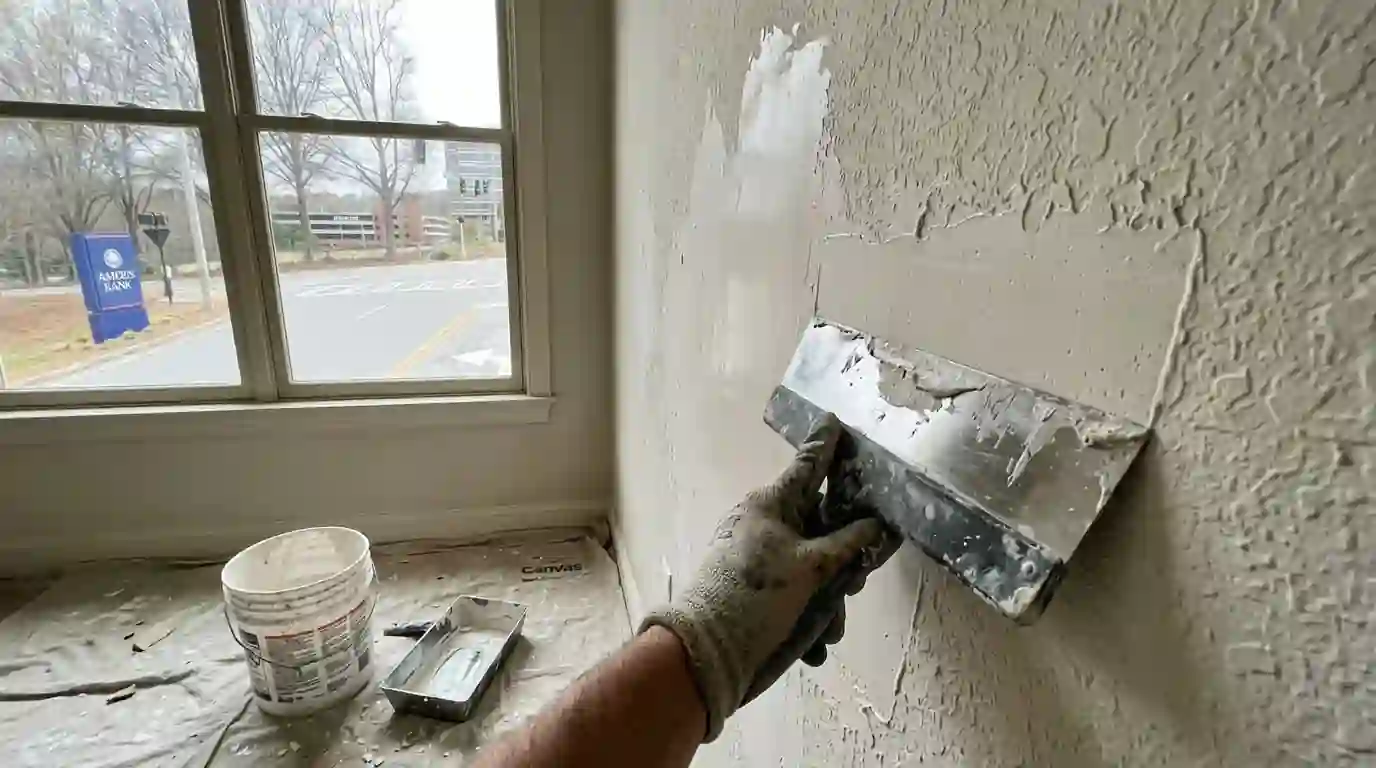
A skim coat is joint compound spread thin over a whole wall or ceiling with a wide trowel, or rolled on and flattened with a blade, then sanded. Two or three coats bury texture, fill the low spots around old repairs and give paint one uniform surface, which drywall finishers call a Level 5 finish. It is the fix for a wall that looks fine at noon and patchy at sunset.
It cannot fix movement. Cracks from shifting framing, bowed studs, loose plaster and anything still damp have to be dealt with first, or they come straight back through. We look for those before pricing, not after finding them under the skim.
Choosing between options
Skim coat, new drywall or new texture
There are three ways to deal with a rough or damaged wall.
| Compare | Skim coat | Hang new drywall | Re-texture |
|---|---|---|---|
| Best for | Texture, patchwork and torn paper | Soft, water-damaged or riddled board | Hiding damage if you like texture |
| Mess and dust | Sanding dust, kept contained | Demolition plus finishing dust | Overspray, mostly |
| Room out of use | Several days with drying | Longest, with demolition | Shortest of the three |
| Final look | Flat and smooth | Flat and smooth | Textured, as chosen |
| Fixes what is underneath | No, that comes first | Yes, the board is replaced | No |
What drives the price
How a skim coat price adds up
Skim coating is priced by area; texture and wall condition do the most to shift it.
Published range: $1.10 to $1.30 per square foot. Source: HomeAdvisor, national figure, June 2026. A planning figure, not our quote.
Texture depth
Heavy knockdown needs knocking down and often an extra coat.
Wall condition
Torn paper, many patches or old anchors add sealing and filling.
Number of coats
Each coat adds a dry cycle and another round of sanding.
Ceilings in the scope
Overhead skimming is slower and needs more setup.
Room prep
Furniture, built-ins and finished floors take time to protect.
Orange peel and knockdown walls
Orange peel is a fine, even bumpy texture; knockdown is heavier, with flattened splats. Both can be skimmed smooth, but knockdown needs more work up front. We take the high points down with a scraper or light sanding, prime first if the wall has a glossy paint, then lay the first coat to fill the valleys. The second coat runs the other direction to flatten what the first left behind, and heavy texture sometimes takes a third. After sanding, a light held flat against the wall shows ridges the eye misses head-on.
Damaged face paper
When wallpaper comes off badly or tape is pulled from a wall, the brown face paper of the drywall tears and goes fuzzy. Compound spread straight over that paper soaks in, and the paper lifts in blisters. So the first step is sealing: an oil-based or shellac primer locks the torn fibers down. Once it dries, we sand off any raised fuzz and skim the whole wall, not only the torn spots, because patching just the damage leaves visible edges. On badly torn walls the skim builds thicker, and we sand it back flat between coats.
Full-room smooth walls
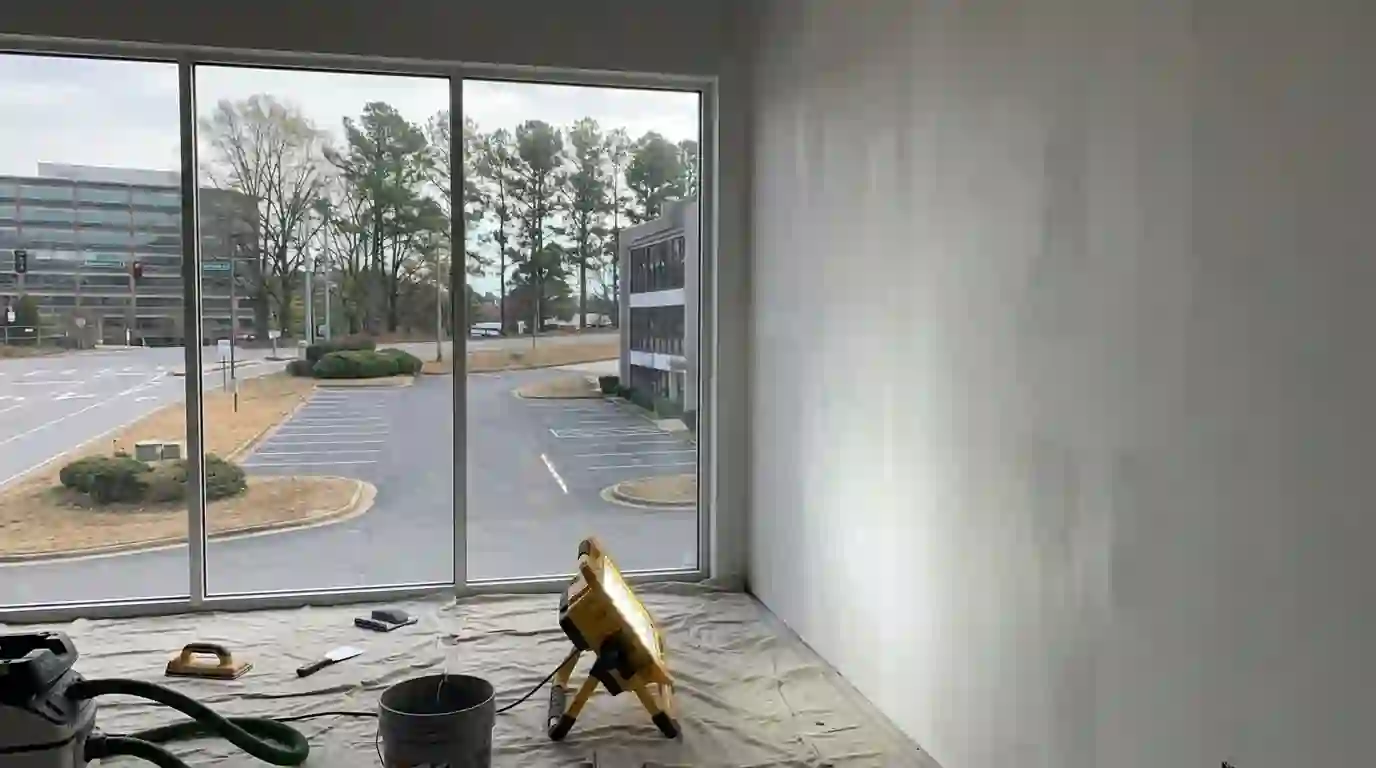
A full-room skim covers every wall, and often the ceiling, so the room has one consistent surface. The room is emptied or the furniture grouped and wrapped, floors are covered and outlet covers come off. We skim in a set order so wet edges blend, and keep dust down with vacuum sanders and plastic over the doorways. A smooth wall looks best in flat or matte paint, which hides small variations. If you want a shinier finish, say so up front, since higher sheens need an even more careful surface.
Around Atlanta
Textured walls in Cobb County homes
Cobb County's housing is mostly middle-aged: 58.2% of homes in its school district area went up between 1970 and 1999, and 12.4% are older (ACS 2019 to 2023). Walls in houses that age have often collected texture and patches over the decades. A skim coat covers texture rather than sanding it off, but the oldest walls still call for care. The CPSC lists textured paint and wall joint compound among materials that may contain asbestos, with their use banned in 1977, and EPA says any sampling should be done by a trained, accredited professional.
How the job runs
How we take a wall from textured to smooth
Check the wall
Cracks, loose plaster and moisture are found before pricing.
Prep and seal
The room is protected, high points knocked down, torn paper sealed.
First and second coats
Thin coats in opposite directions, each dried before the next.
Sand and inspect
Sanded with dust control, then checked with a raking light.
Prime for the finish
Primer evens out absorption before the finish coats.
What you will notice
Signs a wall needs a skim coat before paint
Patches that flash through paint
Old repairs show as dull or shiny squares in side light.
Texture that changes wall to wall
Repairs and additions left mismatched surfaces.
Fuzzy brown paper
Torn drywall face from wallpaper or tape removal.
Shadows along the seams
Tape joints ridge or dip when light hits them low.
Hairline cracks across old texture
Brittle texture is breaking up and will show through.
Questions
Skim Coating questions we hear in Atlanta
Yes, if the paint is sound. Glossy paint is scuff sanded or primed first so the compound grips.
Only once the cause is fixed. Active cracks need tape and reinforcement first.
Yes. Ceilings are slower and messier, and we usually do them before the walls.
Usually two, sometimes three on heavy texture or badly torn walls.
Sanding makes dust, so we cover floors, seal doorways and use sanders with dust collection.
Yes, stopping at a corner so the change in surface does not show.
Same kind of work
More walls, ceilings and repairs
Drywall Repair & Patching
Holes, nail pops, seams and water-damaged board.
Popcorn Ceiling Removal
Scraped, skimmed and repainted flat ceilings.
Wallpaper Removal
Paper and paste off, walls repaired and primed.
Plaster Wall Repair
Cracked and loose plaster patched to match.
Ready when you are
Want walls smooth enough for flat paint?
Describe the texture, the rooms and any damage from wallpaper or old repairs when you phone. We take calls at every hour and will arrange a visit to see the rooms.