Decks, fences and porches
Fence staining and painting around Atlanta
Is the fence fading faster than the house? Both faces take sun and rain, and every post stands in wet soil. Stain applied before the wood grays keeps boards from cupping and splitting early.
Phones answered 24 hours a day, 7 days a week
- Phones answered 24/7
- Scheduled from Tucker
- Decks, fences and porches
Updated October 2026
Short answer
Fence staining in Atlanta costs about $1.20 to $2.45 per square foot of fence face, by 2026 local figures, and the best time is before the wood turns gray. New pine has to dry first. We clean, brighten and stain both sides, back-brushing so the stain soaks into the boards. Call us to set it up.
A fence lasts longer when the stain goes on early
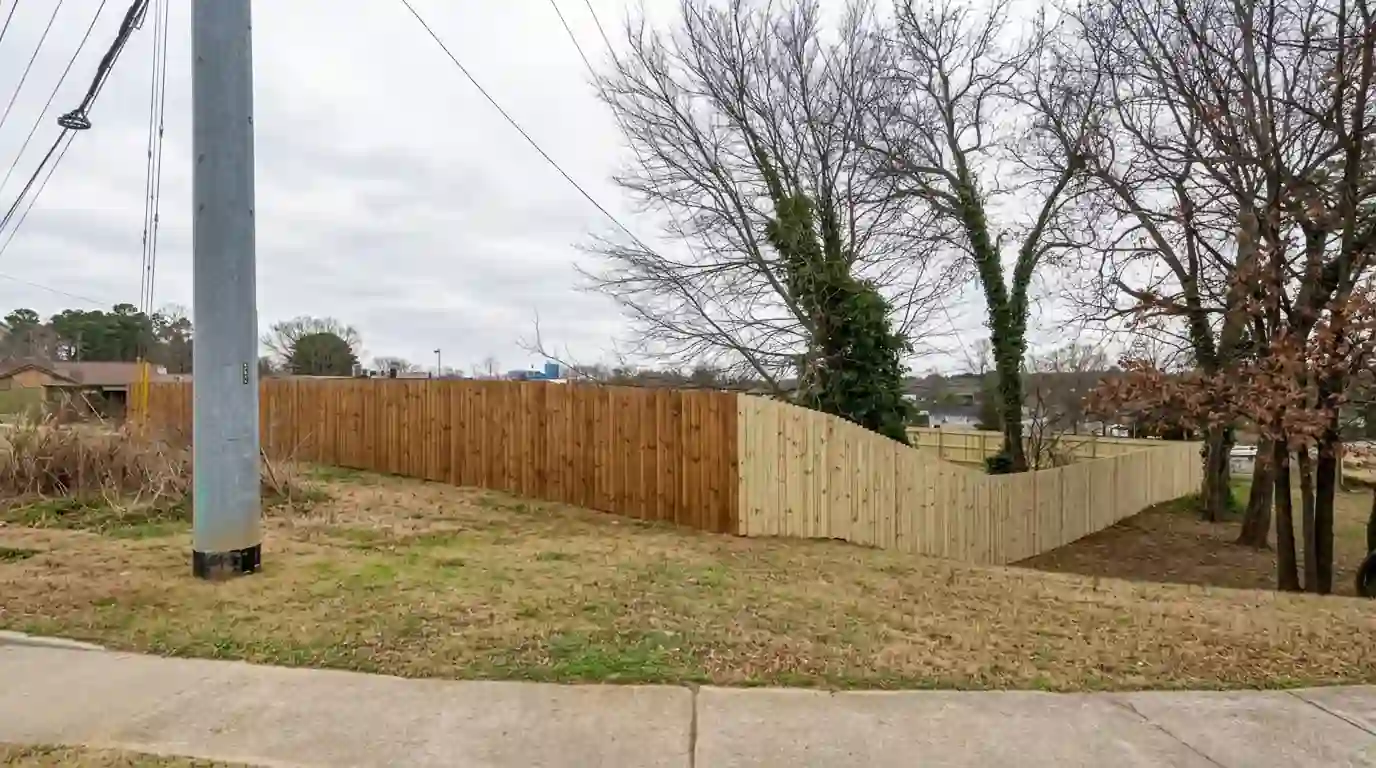
Nothing shelters a fence. Both faces take sun, rain and sprinkler spray, the bottom of every picket sits near wet ground, and the top edges soak up water every storm. Bare pine grays first, then checks and cups as it swells and dries over and over.
A penetrating stain slows how fast water gets in and carries pigment that blocks UV. When it wears, the next coat is a simple clean and re-stain, which is why we recoat fences before they go gray again.
What you will notice
When a fence is due for stain
Water darkens the boards
If a splash soaks in and darkens the wood, the finish is gone.
A gray sunny side
The sunny face grays first; the shaded side often lasts longer.
Green along the bottom
Algae on the low boards means they stay damp.
Cupped or split pickets
Boards that dry unevenly warp and split at the nails.
Paint lifting
On a painted fence, peeling lets water reach bare wood.
Pressure-treated pine fences
Most wood fences are pressure-treated pine, and timing is the tricky part. Fresh treated lumber is often wet from treatment, and stain will not soak in until it dries. The test is simple: sprinkle water on a board. If it beads, wait; if it soaks in, the wood is ready. Then we clean off mill glaze and dirt, brighten the wood and apply a penetrating semi-transparent or solid stain to both sides. Pine takes stain unevenly between knots and sapwood, so a pigmented stain looks more even than a clear sealer.
Cedar fences
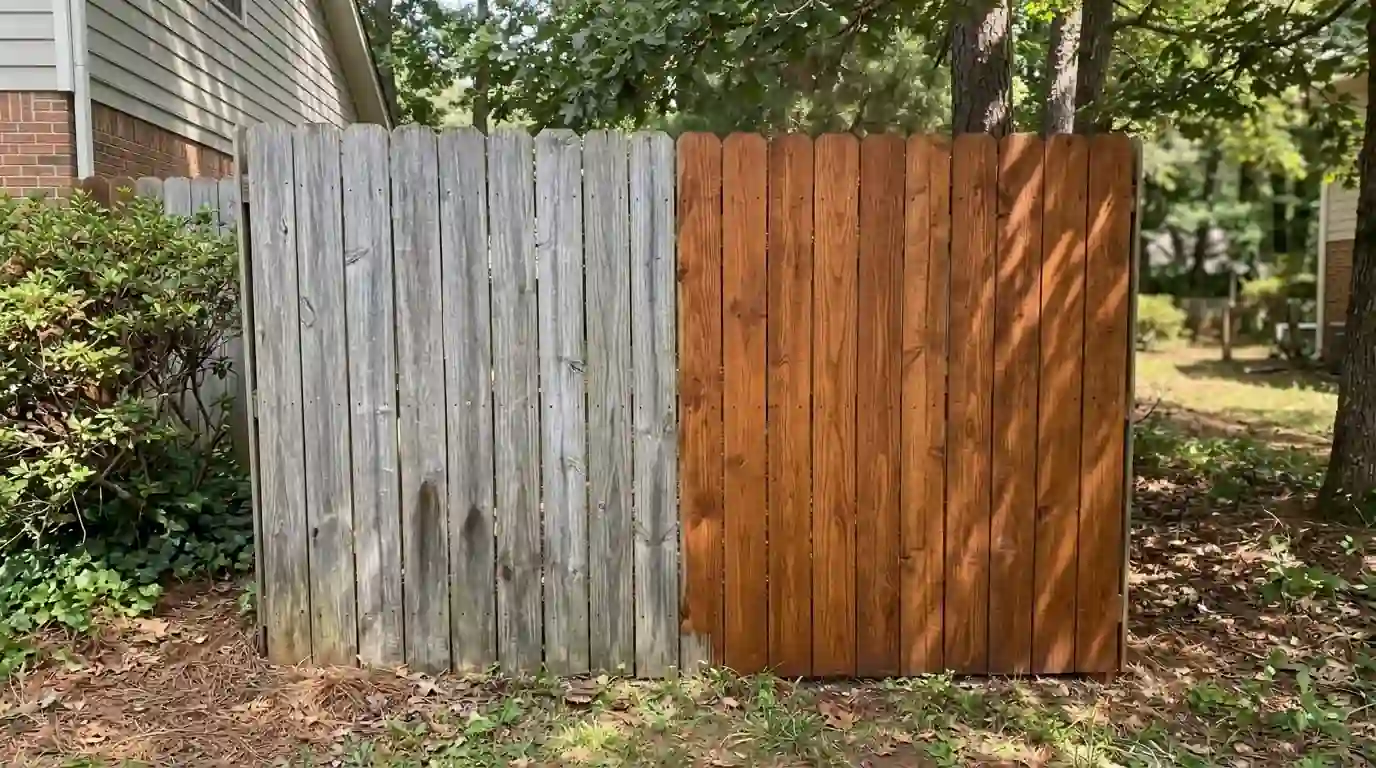
Cedar resists decay better than untreated pine and has a color many people want to keep, so it usually gets a transparent or semi-transparent oil stain rather than paint. Its tannins can bleed through some water-based products as brown streaks, so product choice matters. We clean the fence, brighten it to lift gray weathering and tannin stains, and stain once it is dry. Rough-sawn cedar drinks more stain than smooth boards and may take a second coat applied wet on wet. If you would rather let it go silver, a clear water repellent works.
Painted fences
A painted picket fence looks crisp out front, but paint is a film and asks for more upkeep than stain. Once water gets behind it through end grain or a cracked board, it peels, and the next job starts with scraping. We prime bare wood, seal the tops of pickets and posts, and apply two coats of exterior acrylic. An already painted fence gets loose paint scraped and bare spots primed first. Switching a painted fence to stain means stripping it, so painted fences usually stay painted.
Fences usually get Ready Seal, Cabot or Behr stain, or Sherwin-Williams exterior acrylic when you want them painted.
- Ready Seal
- Cabot
- Behr
- Olympic
- Sherwin-Williams
- Benjamin Moore
- Flood
- Thompson's WaterSeal
Around Atlanta
Georgia termites, wet posts and new pine
UGA Extension entomologist Dan Suiter notes that Georgia sits in the termite belt, that subterranean termites are the most common type here, and that most Georgia yards hold one or more groups of them. Fence posts set in soil are where they meet your wood, so we look for mud tubes at post bases while we work. New pine fences need drying time first, sometimes as long as 6 months, unless the boards were kiln dried after treatment.
How the job runs
Walking the fence line to the last end-grain pass
Walk the fence line
Posts, rails and pickets get checked for rot, loose boards and mud tubes.
Protect the yard
Plants and the grass along the line are covered.
Clean and brighten
Cleaner removes grime and mildew; brightener evens the color.
Stain both faces
Sprayed and back-brushed, or brushed by hand, so stain works in.
Finish the edges
Tops, bottoms and gate frames get a last pass so no end grain stays bare.
What drives the price
Fence staining by the square foot, and what shifts it
Fences are priced by face area or by the linear foot, and the style of fence shifts that rate.
Published range: $1.20 to $2.45 per square foot in Atlanta. Source: HomeGnome, 2026. A planning figure, not our quote.
Length and height
A tall privacy fence has far more surface per foot than a short picket fence.
One side or both
The neighbor side doubles the surface and needs their okay.
Board style
Shadow box and board-on-board fences have more edges to coat.
Stain or paint
Paint takes primer and two coats; penetrating stain one or two.
Access and plants
Shrubs, vines and tight side yards slow the work.
Questions
Fence Staining questions we hear in Atlanta
Until water soaks in instead of beading. Treated pine can take weeks or months; kiln-dried lumber is often ready right away.
Yes, if your neighbor agrees and we can get into their yard.
Stain wears instead of peeling, so it is easier to keep up. Paint looks crisper but needs scraping when it fails.
Only after stripping the paint, which is a big job, so most painted fences stay painted.
We cover plants and rinse nearby leaves. Grass at the fence line may pick up a little stain, which mows out.
A few loose or broken pickets, yes. Rotted posts are fence repair, and we tell you if we find them.
Same kind of work
More decks, fences and porches
Deck Staining
Transparent, semi-transparent or solid deck stain.
Deck Restoration
Failed stain stripped, wood brightened and recoated.
Porch & Patio Painting
Porch floors, ceilings and concrete steps.
Metal Railing & Handrail Painting
Rust removed, iron and aluminum rails repainted.
Ready when you are
Is your fence ready for stain?
Call us whenever it suits you, day or night. A rough length and height, and whether it is pine or cedar, is all we need to set a visit.