Exterior painting
Stucco and EIFS painting for Atlanta homes
Cracks spidering across the stucco or dark streaks under the windows? We tell hard coat from EIFS first, because the two need different repairs and coatings.
Phones answered 24 hours a day, 7 days a week
- Phones answered 24/7
- Scheduled from Tucker
- Exterior painting
Updated October 2026
Short answer
Before painting stucco on an Atlanta home, we find out whether the wall is traditional hard coat or EIFS, a foam-backed synthetic system. Hard coat takes masonry primer and breathable acrylic or elastomeric paint; EIFS needs gentle cleaning and coatings its makers recommend. We fill hairline cracks, reseal around windows and apply two coats.
Telling hard coat stucco from EIFS before painting
Press on the wall and knock. Hard coat stucco is cement-based plaster over lath and feels solid like masonry. EIFS, short for exterior insulation and finish system, is a thin finish over foam board; it sounds hollow and gives slightly under firm pressure. From the street they look alike.
The difference matters for paint. Hard coat can take thick, crack-bridging coatings. EIFS should not be sealed into a vapor-tight shell, and its trouble usually starts at windows, doors and the bottom edge, where water gets behind the finish. We check those spots before we price any paint.
What drives the price
What sets the price of a stucco paint job
Stucco takes more paint per square foot than smooth siding, and crack repair can be a big share of the labor.
Published range: $3,600 to $7,200 to paint a stucco house, average $4,500. Source: HomeAdvisor, national data, June 2026. A planning figure, not our quote.
Hard coat or EIFS
EIFS needs gentler cleaning and specific coatings, and any moisture concern comes first.
Crack count
Many cracks to fill and texture-match add hours before primer.
Coating choice
Elastomeric goes on thicker and uses more material than acrylic.
Texture depth
Heavy textures drink more paint and need back-brushing.
Sealant joints
Windows, doors and penetrations often need fresh sealant.
Hard coat stucco
Traditional stucco is portland cement, sand and lime applied in coats over metal lath. It is tough and breathable, but it cracks as it cures and as the house settles. Before painting, we wash it at low pressure, let it dry thoroughly and clean off any efflorescence. Cracks are filled with a flexible patch or textured sealant so repairs do not show as smooth stripes. Masonry primer goes on raw or patched areas, then two coats of acrylic or elastomeric paint, rolled and back-brushed into the texture so the high points do not look thin.
EIFS and synthetic stucco
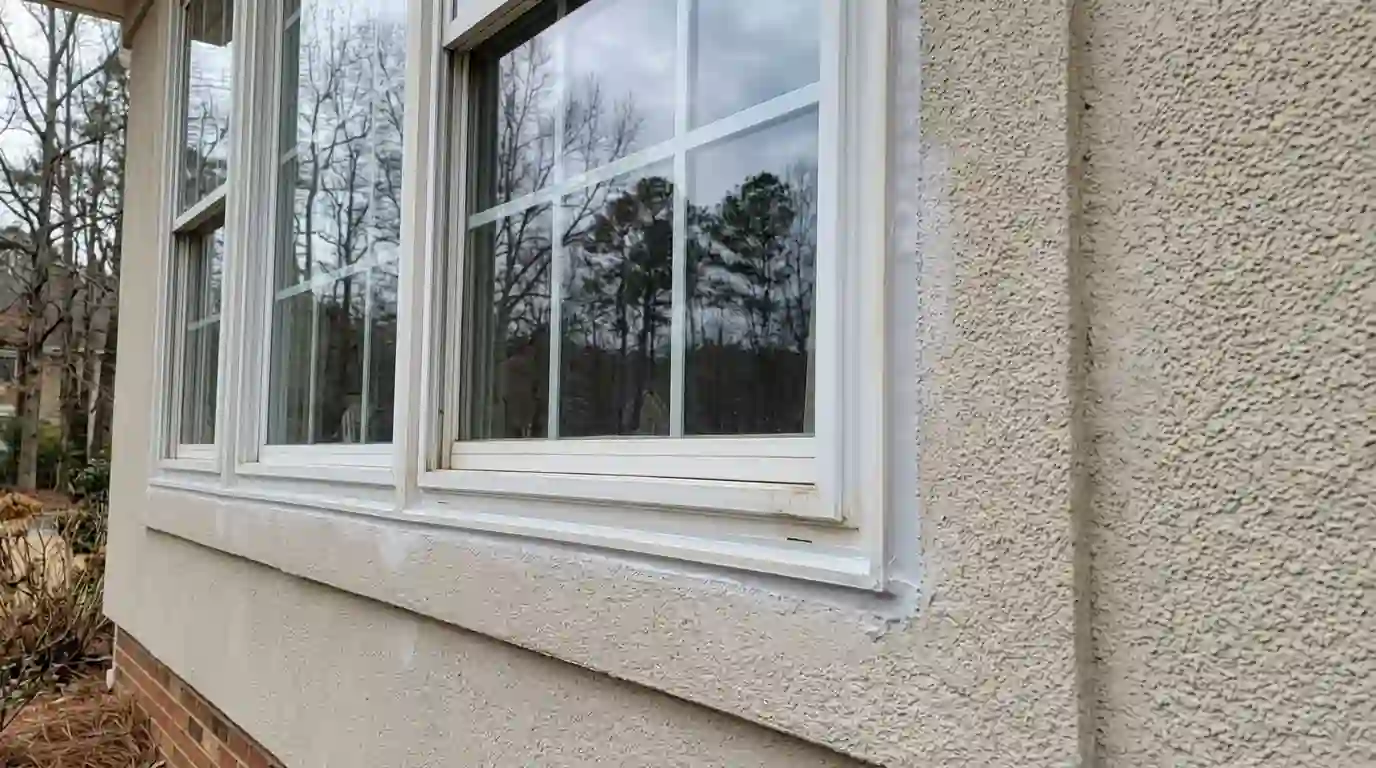
EIFS has a thinner, softer finish over foam insulation, and it reacts badly to the wrong treatment. High-pressure washing can gouge it, and heavy elastomeric coatings can hold moisture in. We clean it gently, check the sealant joints at windows, doors and pipe penetrations, and look for soft spots, cracks or stains that point to water behind the finish. If those show up, we recommend a moisture inspection before paint, because paint hides the evidence. On a sound system we use an acrylic coating recommended for EIFS so it stays breathable.
Hairline crack bridging
Hairline cracks are usually cosmetic, but they let water wick in and they telegraph through ordinary paint. Elastomeric coatings are built for this: they go on thick, stretch as the wall moves and span small cracks instead of splitting with them. We fill anything wider than a hairline first, then apply elastomeric at the film thickness the maker specifies, usually in two coats. On EIFS, or anywhere the wall needs to breathe more, we use a high-build acrylic that bridges hairlines without fully sealing the surface. Cracks that keep widening get flagged, not painted.
Around Atlanta
Synthetic stucco and Atlanta rainfall
Atlanta averages about 49.7 inches of rain a year, spread across every season, so a stucco wall here rarely gets a long dry spell. That matters most on EIFS. A FOX 5 Atlanta real estate column reported that EIFS went on almost 30% of homes built in the Southeast by the early 1990s, that a moisture intrusion controversy broke out in 1995, and that water reaching the insulation board had no way back out. If your house has synthetic stucco, the sealant at every window and door deserves a close look before paint.
How long stucco needs to dry and cure
Stucco holds water like a sponge, so drying time sets the schedule. After washing, we wait until the wall is dry through, which can take more than a day in humid weather, and patches need their own cure time before primer.
Elastomeric coatings also need dry weather to cure; rain on a fresh coat can leave it tacky. We finish coats early enough that dew does not land on wet paint, so expect a stucco house to take longer than a siding repaint of the same size.
How the job runs
Our stucco painting sequence
Identify the system
We confirm hard coat or EIFS and check windows, doors and the base of the wall.
Gentle wash
Low-pressure cleaning removes dirt, mildew and chalk without gouging the finish.
Repair and seal
Cracks are filled to match the texture and failed sealant is replaced.
Prime
Masonry primer on hard coat patches and raw areas.
Coat and back-brush
Two coats rolled and brushed into the texture, in dry weather.
What you will notice
What stucco shows when it needs attention
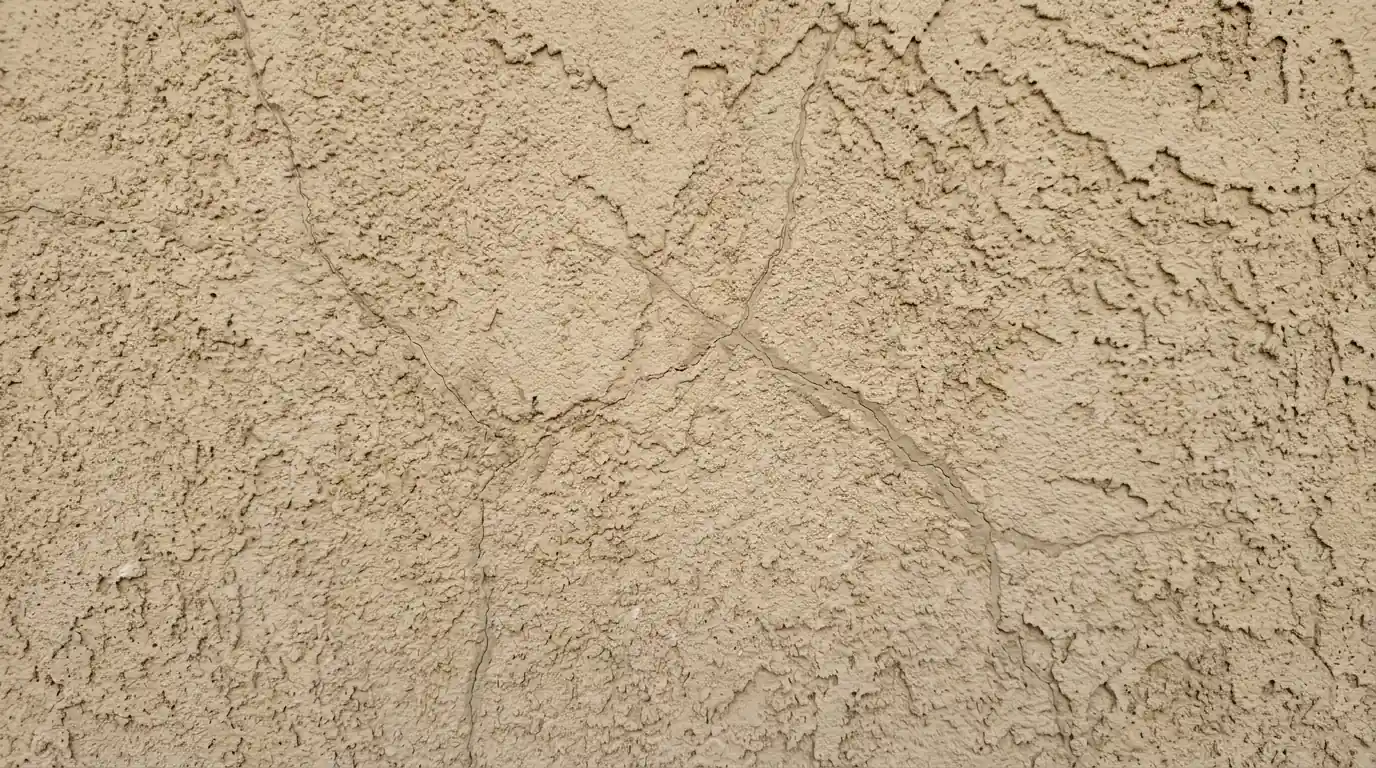
Spiderweb cracks
Fine cracks in a web pattern are usually surface shrinkage, but they still let water in.
Streaks below windows
Dark runs from window corners point to failed sealant or flashing.
White crust or powder
Efflorescence means water is moving through the stucco and leaving salts.
Green or black growth
Shaded, damp walls grow algae that stains the texture.
Soft or hollow spots
On EIFS, a spot that gives under pressure may be wet behind the finish.
Questions
Stucco Painting questions we hear in Atlanta
On hard coat with hairline cracks, often yes. On EIFS, or walls that need to breathe, a high-build acrylic is usually safer.
Yes, with gentle cleaning and coatings the EIFS maker recommends, once the system is sound.
Paint bridges hairlines. Wider or growing cracks need repair, and some need an inspection.
At low pressure. High pressure can damage EIFS and force water into hard coat cracks.
Knock on it: EIFS sounds hollow and feels slightly soft. We can tell during the walk-around.
Yes. Big changes may need an extra coat, and very dark colors absorb more heat on sunny walls.
Same kind of work
More exterior painting
Exterior House Painting
Siding, trim and brick for ranch and two-story homes.
Brick Painting & Limewash
Mineral paint, limewash or German smear on brick.
Wood & Fiber Cement Siding Painting
Fiber cement, cedar and hardboard lap siding.
Vinyl & Aluminum Siding Painting
Vinyl-safe colors on faded vinyl and aluminum.
Ready when you are
Stucco cracking or streaking?
We answer 24/7. Point us to the cracks or stains, and we will look at the wall up close and tell you whether it is hard coat or EIFS.