Walls, ceilings and repairs
Limewash, Venetian plaster and glaze finishes in Atlanta
Limewash, polished plaster and glazes give a wall depth that shifts as the light moves through the day. We sample each one on boards in your room before a single wall gets touched.
Phones answered 24 hours a day, 7 days a week
- Phones answered 24/7
- Scheduled from Tucker
- Walls, ceilings and repairs
Updated October 2026
Short answer
Limewash and decorative finishes in Atlanta homes give interior walls a soft, mottled or polished look that flat paint cannot. Limewash is brushed on in thin layers over a mineral primer; Venetian plaster is troweled and burnished in thin coats; glazes add translucent color over a base. We make sample boards first, because every finish varies with the wall.
Hand-applied finishes and the rooms they suit
These finishes go on by hand, and the brush or trowel marks are part of the look. A limewashed wall will never be perfectly even, and it should not be; polished plaster shows every trowel pass under raking light. The right choice depends on the room, its light and how much variation you want to live with.
Most decorative work lands in living rooms, dining rooms, bedrooms, entries and fireplace walls. Hallways and mudrooms usually wear better in a scrubbable paint.
Choosing between options
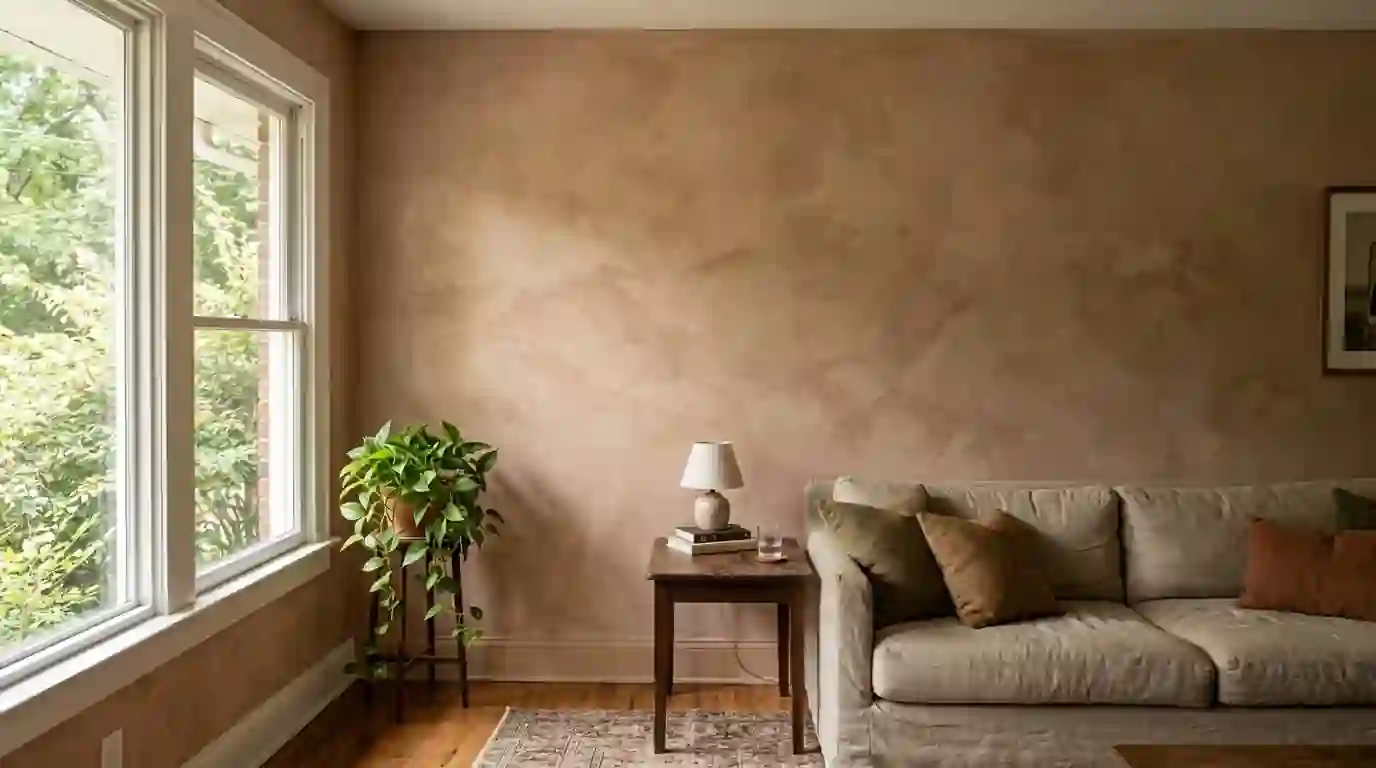
Limewash, polished plaster or paint for a feature wall
Each finish solves a different problem. This is how they compare on the questions people ask most.
| Compare | Limewash | Venetian plaster | Flat or matte paint |
|---|---|---|---|
| Look | Soft, cloudy, brushed | Smooth stone, matte to polished | Even, uniform color |
| Washability | Low; touch up with more limewash | Good once waxed or sealed | Good in scrubbable lines |
| Base needed | Mineral primer or bare plaster | Smooth, repaired, primed wall | Standard primer |
| Touch-ups | Blend easily | Need a practiced hand | Easy if leftover paint is kept |
| Labor | Moderate | Highest | Lowest |
What drives the price
Why decorative finish prices vary so widely
Hand-applied finishes are priced on labor and coats, not just wall area.
Published range: $10 to $25 per square foot to apply Venetian plaster. Source: HomeAdvisor, national data, June 2026. A planning figure, not our quote.
Finish type
Limewash takes fewer passes than polished plaster, which is burnished coat by coat.
Wall condition
Cracks and joints are repaired first because thin finishes show everything.
Number of coats
More layers bring more depth and more labor.
Sealer or wax
Damp or high-touch rooms need a protective top coat.
Height and cut-ins
Tall walls, stair runs and lots of trim slow the hand work.
Interior limewash
Limewash is slaked lime and natural pigment thinned with water. On drywall or painted walls it needs a mineral-based primer to give it something porous to grip; on bare plaster it soaks in directly. We brush it on in crossing, cloud-like strokes, usually two or three thin coats, and the color lightens noticeably as each coat dries, which is why we test on a board first. The finish stays matte and breathable. It marks if scrubbed, so a limewashed wall is touched up with more limewash rather than washed.
Venetian and textured plaster
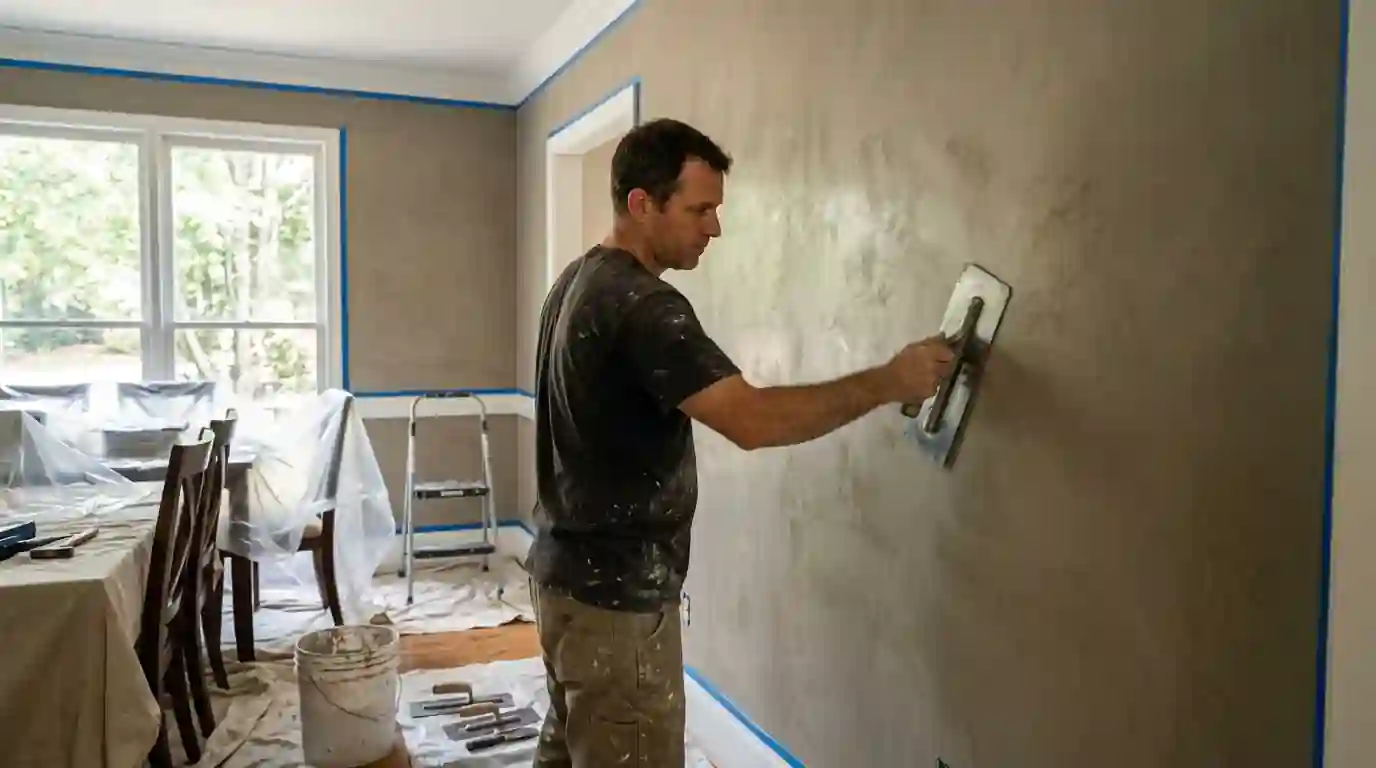
Venetian plaster is lime putty or a lime-based compound laid on with a steel trowel in very thin layers, then burnished to a stone-like sheen. Fewer passes leave a matte, cloudy face; more passes polish it toward a marble glow. Textured plasters such as clay or Roman-style finishes go on thicker and stay matte with a visible trowel pattern. Both need a smooth, sound base, because cracks and drywall joints show through thin plaster. Waxed polished plaster can handle a powder room or a fireplace surround.
Faux and glaze finishes
Glazing builds translucent color over a painted base coat, then works it with a rag, brush, sponge or comb while it is wet. Done with restraint it reads as aged plaster, parchment or soft linen; done heavily it dates a room fast. Most requests now are subtle: a glazed tone on built-in shelving, an aged look between ceiling beams, or a strie finish in a dining room. We mix the glaze with an extender so it stays workable long enough to blend each section into the next, so no dried edge shows as a line.
Around Atlanta
Humid Atlanta summers and lime-based finishes
Lime finishes cure slowly by drawing carbon dioxide from the air, and in damp air each coat also takes longer to dry. Atlanta's July relative humidity averages 74.4 percent, so on summer jobs we keep the AC running, the doors closed and more time between coats. Older plaster walls take lime finishes especially well. Most of Virginia-Highland was built between 1909 and 1926, when plaster was still the usual wall finish; where that plaster is bare it absorbs limewash directly, and where it has been painted it gets a mineral primer first.
How long limewash and plaster take to cure
Limewash dries to the touch fast but keeps lightening as it cures, and humid air slows that. Each coat dries before the next, so even one accent wall usually spreads over more than one visit.
Venetian plaster takes longer: several thin coats, then burnishing and any wax. The room stays usable between coats with the wall kept clear.
How the job runs
From sample board to a finished feature wall
Study the room
We look at the light, the wall condition and what the finish sits beside.
Make sample boards
Two or three boards in your color, made with the tools we will use on the wall.
Prepare the wall
Repairs, sanding and the primer that particular finish needs.
Apply in layers
Thin coats, each dried before the next, worked the same way across the wall.
Seal and review
Wax or sealer where needed, then we look at it with you in daylight.
Questions
Limewash & Decorative Finishes questions we hear in Atlanta
Yes, with a mineral-based primer first. Without it, limewash has nothing porous to grip and can rub off.
Not really. Dirty spots are touched up with more limewash rather than scrubbed.
Yes, sealed or waxed. Direct shower spray is still a job for tile.
Close, not exact. The pattern shifts with each wall and each coat.
Usually it is sanded, primed and painted over, or skim coated if the texture is heavy.
Yes. Limewash and glaze both work overhead; polished plaster on a ceiling is slower and costs more.
Same kind of work
More walls, ceilings and repairs
Drywall Repair & Patching
Holes, nail pops, seams and water-damaged board.
Popcorn Ceiling Removal
Scraped, skimmed and repainted flat ceilings.
Wallpaper Removal
Paper and paste off, walls repaired and primed.
Skim Coating & Wall Smoothing
Textured or torn walls made smooth for paint.
Ready when you are
Want to see a finish in your own light?
Pick up the phone whenever it suits you. Mention the room and the look you are after, and we will bring sample boards to compare.