Walls, ceilings and repairs
Plaster wall and ceiling repair for older Atlanta homes
A crack that comes back every year, or a wall that moves when you press it? We repair lath-and-plaster walls and ceilings so the patch disappears under paint.
Phones answered 24 hours a day, 7 days a week
- Phones answered 24/7
- Scheduled from Tucker
- Walls, ceilings and repairs
Updated October 2026
Short answer
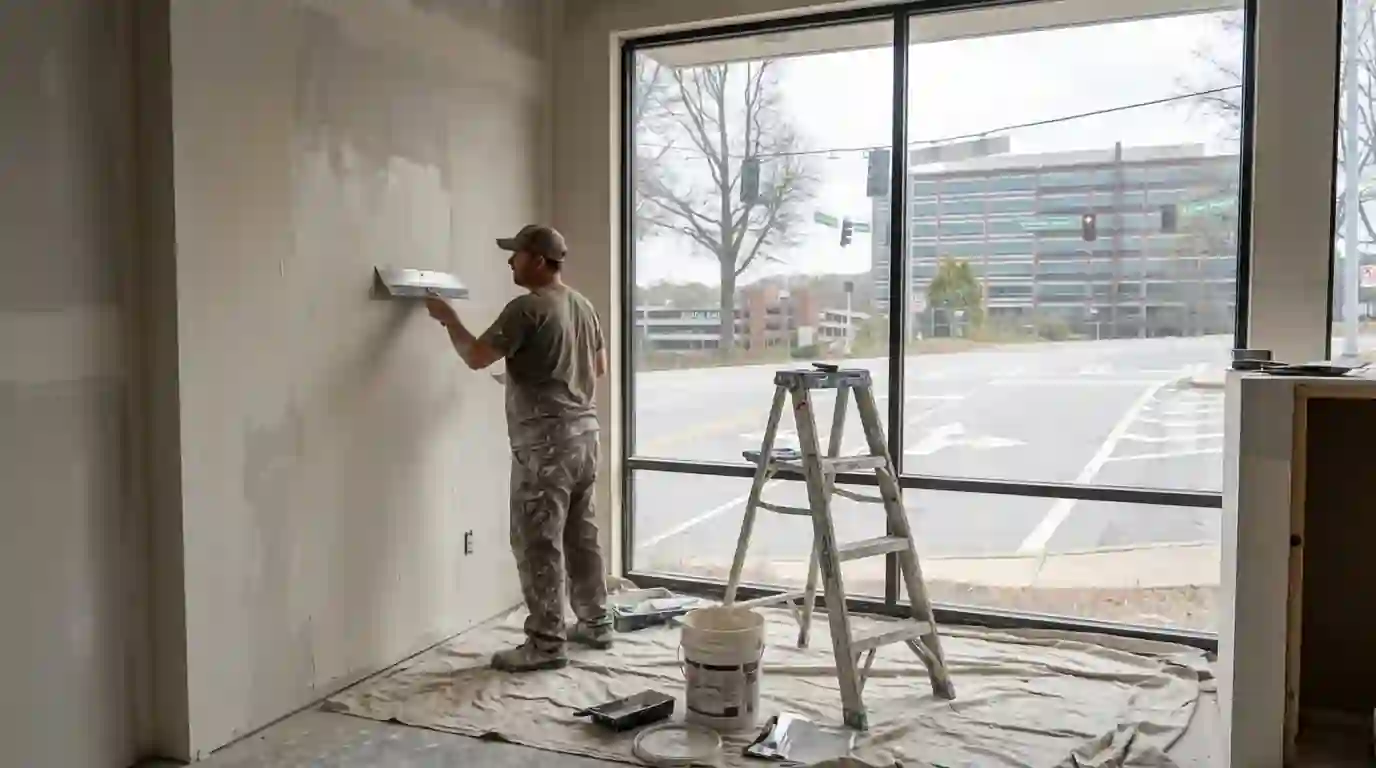
Plaster repair in Atlanta houses starts with checking whether the plaster is still locked onto the lath. Tight plaster with hairline cracks gets mesh tape and setting compound; loose sections are screwed back with plaster washers first. We fill to match the old texture, prime the repair and repaint the whole wall or ceiling.
Why old plaster cracks and what a lasting repair takes
Lath-and-plaster walls went up in coats. The first was pushed through gaps in the wood lath so it curled behind and hooked on, and those curls, called keys, hold the wall in place. Settling, slammed doors and old leaks break them over the decades, and the plaster cracks, bulges or sounds hollow when you knock.
So a lasting repair starts behind the surface. Skim over loose plaster and the crack is back within a season. We check each damaged area by hand, reattach what has let go, cut out what cannot be saved, fill in layers, then prime and paint so the wall reads as one surface.
Choosing between options
Patch, laminate or replace a badly damaged plaster wall
When plaster is too far gone to reattach, there are three workable ways to bring the surface back.
| Compare | Plaster patch | Thin board laminated over | Section cut out for drywall |
|---|---|---|---|
| Best for | Cracks, holes and small areas | Ceilings with widespread cracks | Crumbling or water-damaged sections |
| Keeps original plaster | Yes | Yes, covered in place | No |
| Dust and mess | Low to moderate | Low | Highest |
| Trim and outlets | No changes | May need extending | Usually no changes |
| Finish | Follows the old texture | Flat, smooth face | Skimmed to blend |
What drives the price
What a plaster repair bill depends on
Plaster is priced on hours and area, not rooms.
Published range: $1,500 to $9,000 for a typical plaster repair, with ceilings at $100 to $120 per square foot. Source: Angi, national data, July 2026. A planning figure, not our quote.
Loose or just cracked
Reattaching plaster with washers takes far longer than taping a tight crack.
Walls or ceilings
Overhead work is slower and needs support while plaster is pulled back.
Texture matching
Sand-float and troweled finishes take extra coats to blend.
Old paint layers
Paint on pre-1978 walls changes how dust is contained.
Repaint area
Even a small patch means repainting the whole wall or ceiling.
Cracks and loose plaster
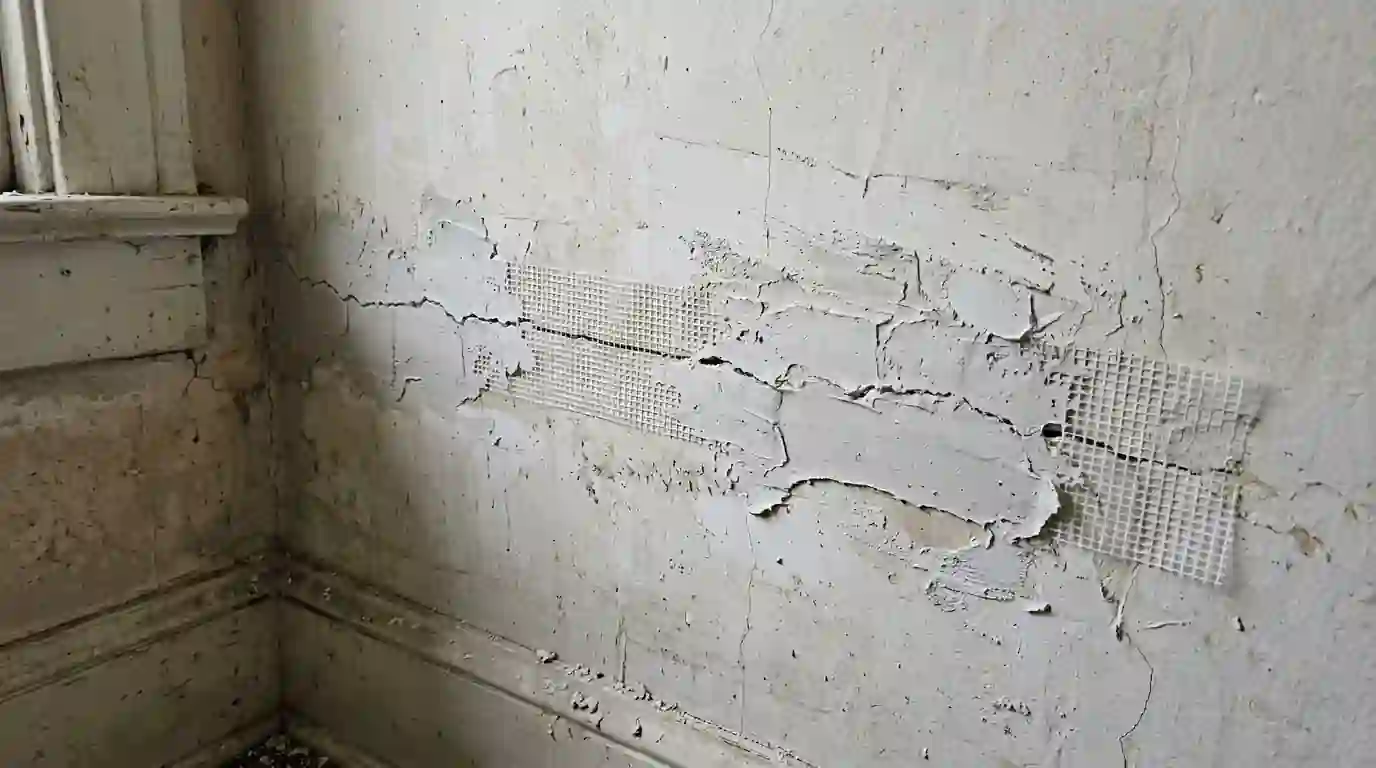
Hairline cracks over doors and windows are the most common call, and most are cosmetic: the plaster is still tight and only the finish coat has split. We open the crack slightly, embed fiberglass mesh tape in setting compound and feather it wide so it does not telegraph through paint. Loose plaster is another job. When a section flexes under your palm, we pull it back to the lath with plaster washers, adding adhesive where it helps, before any patching. Sections that crumble are cut back to sound edges and rebuilt.
Patching to match old walls
Old plaster rarely has the flat face of new drywall. Some walls carry a light sand texture, others a hand-troweled wave that catches light at an angle, and a patch that is too smooth stands out the moment raking light hits it. We build deep holes in layers with base coat plaster or setting compound, then finish the top with a material and trowel stroke that follows the wall around it, adding sand texture where the old finish has it. Primer evens out the porosity so the topcoat sheen does not flash over the repair.
Plaster ceilings
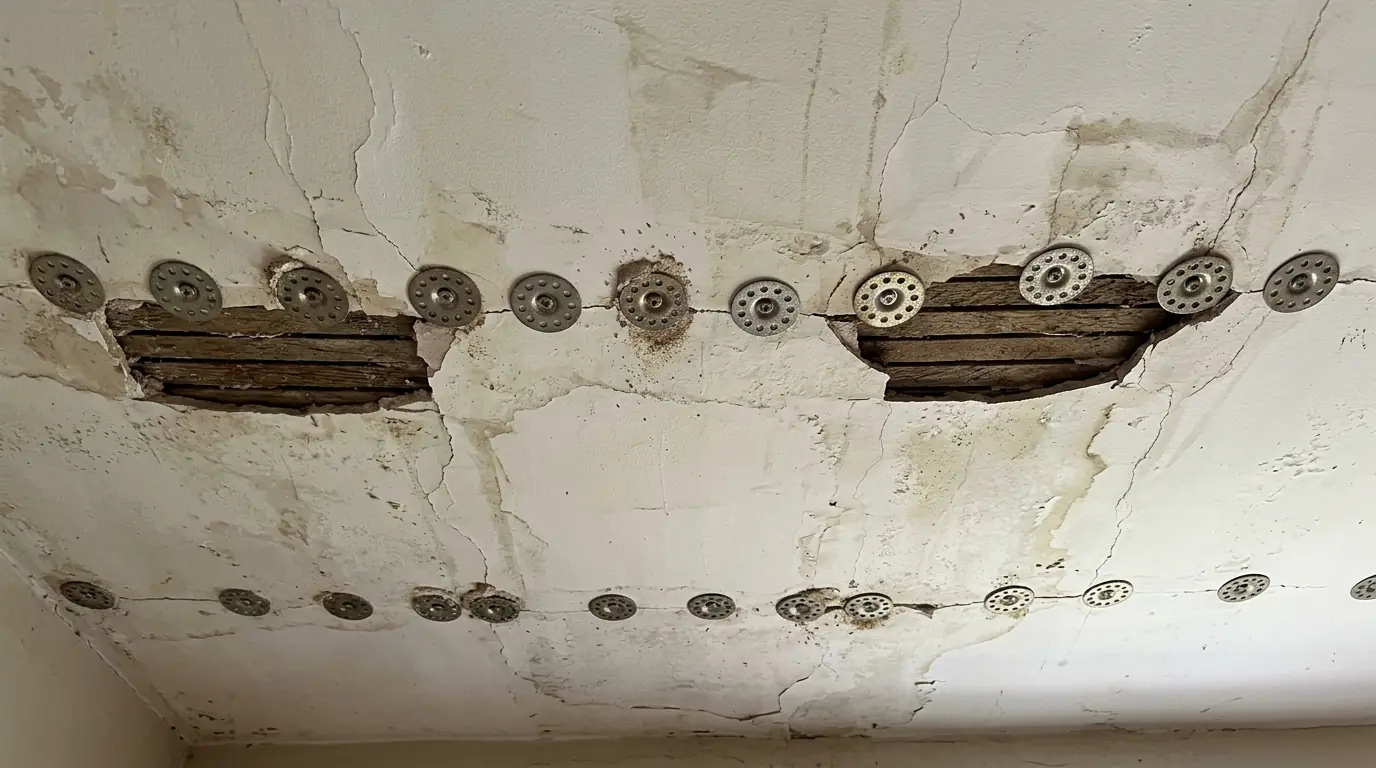
Ceilings are where plaster failure turns serious, because gravity pulls on the keys all the time. A sagging or bulging ceiling, long cracks running along the lath or crumbs on the floor all mean the plaster is separating, and we treat that as a safety repair before a paint job. We support the area, screw it back to the joists with plaster washers and fill the cracks once the surface is flat again. When a ceiling is too far gone to reattach, we lay out the choices plainly: patch it, laminate thin board over it or replace the section.
Around Atlanta
Intown houses still built on lath and plaster
Plaster is the original wall finish in the oldest intown neighborhoods. Inman Park was planned in the late 1880s and holds Atlanta's best collection of houses from the late 19th and early 20th centuries, and most of Virginia-Highland was built between 1909 and 1926. Houses from those decades were finished in plaster over wood lath, often now under many coats of paint. The EPA Renovation, Repair and Painting rule covers paid work that disturbs paint in homes built before 1978 and requires a lead-safe firm using trained renovators; it does not apply to owners working on their own homes.
How the job runs
How a plaster repair moves from tapping to topcoat
Sound the walls
We press and tap to map where plaster is loose, hollow or still keyed.
Contain the dust
Floors and furniture are covered and the room closed off before cutting or sanding.
Reattach and cut back
Loose plaster goes back with washers; crumbling sections are cut to sound edges.
Fill in layers
Base coats build depth, then the finish coat follows the wall texture.
Prime and paint
The repair is primed, then the full wall or ceiling gets finish paint.
What you will notice
Plaster problems you can spot before they spread
Cracks that return after paint
A crack that reopens within months points to movement or broken keys.
Bulges and soft spots
A section that bows or flexes when pressed has let go of the lath.
A hollow knock
Knuckle taps sound dull and empty over separated plaster.
Long lines across a ceiling
Straight cracks that follow the lath overhead are a separation warning.
Stains or crumbling
Old leaks leave plaster powdery, soft or brown.
Questions
Plaster Wall Repair questions we hear in Atlanta
Sometimes, on sound ceilings. It adds thickness, so outlets and trim may need extending.
The plaster is loose and moving, or the patch was too narrow.
Both, depending on depth; the top layer matches the wall.
A sagging one can drop pieces, so keep people out of the room and call.
Yes, once it is feathered, textured to match and primed.
Yes, without pulling the trim unless it is already loose.
Same kind of work
More walls, ceilings and repairs
Drywall Repair & Patching
Holes, nail pops, seams and water-damaged board.
Popcorn Ceiling Removal
Scraped, skimmed and repainted flat ceilings.
Wallpaper Removal
Paper and paste off, walls repaired and primed.
Skim Coating & Wall Smoothing
Textured or torn walls made smooth for paint.
Ready when you are
Plaster cracking or pulling away from the lath?
Phones are answered around the clock. Describe the room and how the plaster is moving, and we will arrange a visit.