Interior painting and color
Basement painting in Atlanta, from block walls to open ceilings
White crust on the block, bare joists and ducts overhead? We paint finished and unfinished basements around Atlanta and answer the moisture question before any coating goes on.
Phones answered 24 hours a day, 7 days a week
- Phones answered 24/7
- Scheduled from Tucker
- Interior painting and color
Updated October 2026
Short answer
Basement painting in Atlanta covers three different jobs: drywall in a finished basement, bare block or poured walls, and open ceilings with joists and ducts. Each takes a different coating. We check masonry for moisture and efflorescence first, because paint on a damp wall peels. Price depends on the surfaces, so we quote on site. Call to book.
Moisture first, then the paint
A basement is the one room where the wall can work against the paint. Concrete and block wick ground moisture inside, leaving efflorescence, a white mineral crust, and a damp face that paint cannot hold.
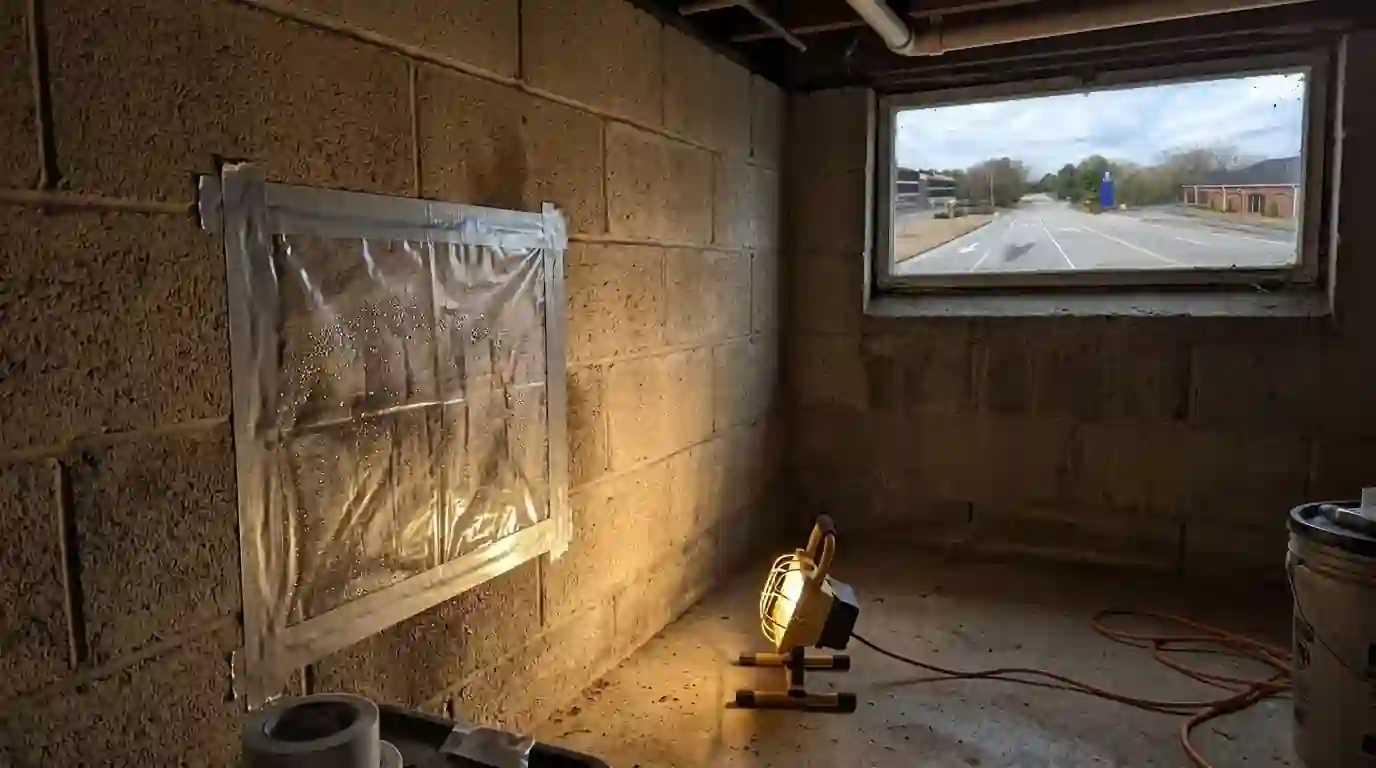
So we test. A square of clear plastic taped to bare masonry overnight tells the story: droplets underneath mean moisture is coming through the wall, droplets on top mean humid room air is condensing. Efflorescence gets wire-brushed off, and the coating is matched to the wall.
Choosing between options
Comparing coatings for basement walls and ceilings
The right product depends on the surface and how damp it is.
| Compare | Masonry waterproofing paint | Acrylic masonry paint | Dry-fall spray |
|---|---|---|---|
| Where it goes | Damp-prone block and poured walls | Dry block and concrete | Open ceilings, joists and ducts |
| What it does | Slows moisture through the wall | Brightens a dry wall and lets it breathe | Hides clutter under one color |
| Colors | Few, mostly white and light tones | Wide range | Usually black, gray or white |
| Limits | Will not stop active leaks | Peels if moisture is present | Everything below must be covered |
What drives the price
What decides the price of basement painting
Basements vary too much for one per-foot figure, so we price after seeing the space. These set it:
Surface type
Drywall, block, poured concrete and open ceilings each take different products.
Moisture and efflorescence
Damp walls need testing, cleaning and a waterproofing coating.
Open ceiling spraying
Covering everything below and spraying joists and ducts is a full setup.
Stored items
Boxes and furniture have to be moved or covered first.
Old coatings
Flaking paint on block comes off before new paint goes on.
Finished basement walls
A finished basement paints much like any other room, with a few differences. Drywall close to the slab can show water staining or soft spots along the bottom edge, and we check those before painting over them. Light is often limited, so colors read darker than the chip, and a lighter wall color in eggshell helps the room feel bigger. Basement family rooms and playrooms take a beating, so a scrubbable finish makes sense. If you have a dehumidifier, keep it running for the days around painting so the coats dry properly.
Block and poured walls
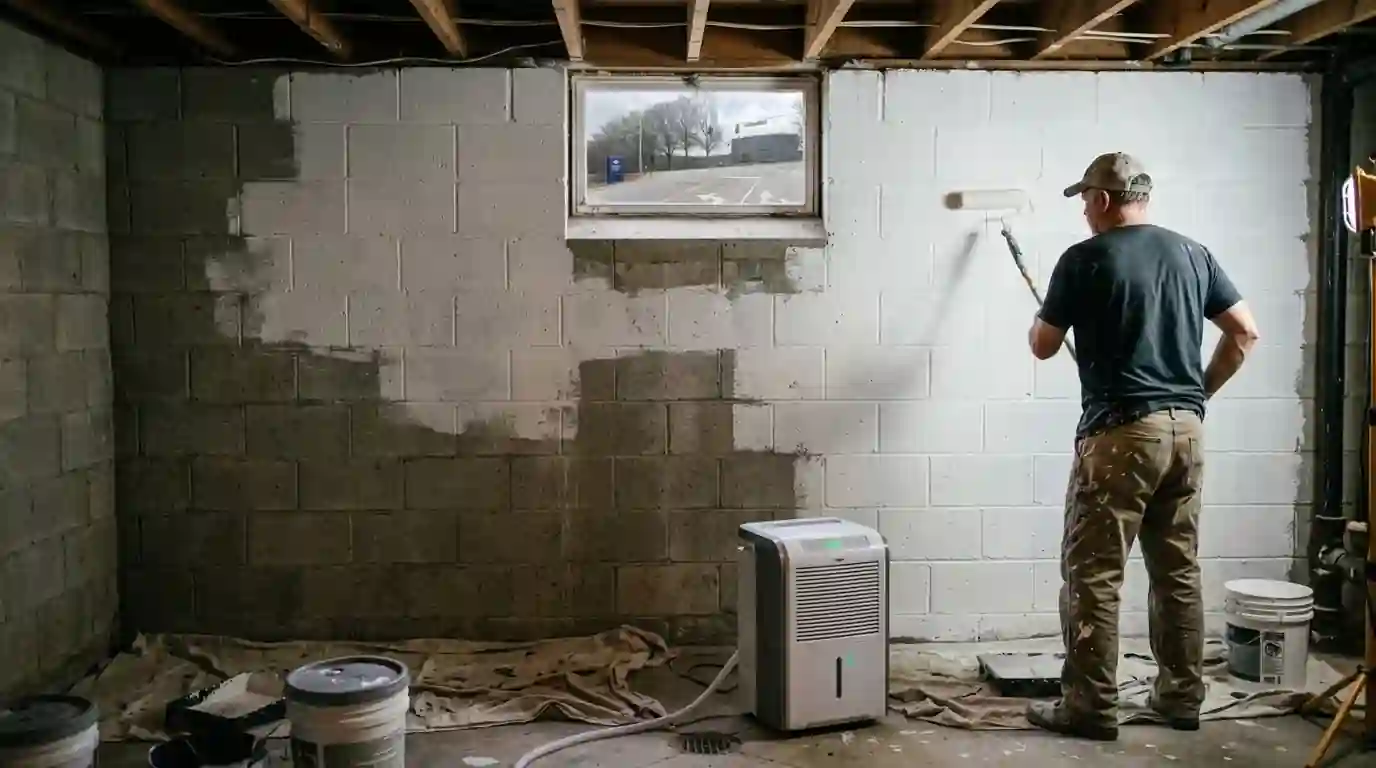
Bare block and poured walls call for the most judgment. If the plastic test shows water coming through, a masonry waterproofing coating can slow the dampness, but no paint stops a wall that actively leaks; that needs drainage or grading work first, and we will say so. On dry walls we clean off dust and efflorescence, fill large voids in the block, then apply primer and two coats of masonry paint worked into the pores. Block drinks more paint than drywall because of its texture, so roller nap and coverage are planned around it.
Basement ceilings and ductwork
Open ceilings with exposed joists, subfloor, wiring and ducts are often sprayed one color, usually black, gray or white, which hides the clutter and opens the space up for far less than hanging drywall. We cover the walls, floor and anything stored below, mask lights and mechanical equipment, and spray a dry-fall coating that dries to dust before it can settle. Ducts are cleaned of dust and oil so the paint sticks. Labels on the electrical panel, gas meter and equipment data plates stay masked and readable.
Damp-prone block usually gets Drylok or Rust-Oleum masonry coatings, while finished walls and dry-fall ceilings go on in Sherwin-Williams products.
- Drylok
- Rust-Oleum
- Sherwin-Williams
- Benjamin Moore
- Behr
- PPG
- Zinsser
- Kilz
- Valspar
- Glidden
Around Atlanta
Sloped lots and steady rain under Atlanta basements
Atlanta sits among the foothills of the Appalachian Mountains, on a ridge south of the Chattahoochee River, and hilly lots with daylight or walk-out basements come with that terrain. One basement wall ends up buried deep while another sits at grade. With about 49.7 inches of rain a year spread through every season, the uphill walls see wet soil often. We check the uphill side most closely and schedule masonry coatings after a dry stretch, not right after a storm.
How the job runs
How we approach a basement, from test to topcoat
Test the walls
Plastic sheet tests and a close look at cracks show where moisture gets in.
Clean and repair
Efflorescence, dust and flaking paint come off; voids and cracks get filled.
Protect the space
Floors, stored items, the furnace and water heater get covered.
Prime and coat
Each surface gets the primer and coating chosen for it.
Ventilate and dry
Fans and the dehumidifier run while coats dry.
What you will notice
What your basement walls are telling you
White crusty deposits
Efflorescence is salt left behind by water moving through masonry.
Paint flaking off block
Moisture pushed the old coating off; it has to come off before new paint.
Damp patches after rain
Dark spots after storms point to water at the foundation.
A musty smell
Mildew on walls or stored boxes means humidity is running high.
Cracks in poured walls
Hairline cracks are common; wide or leaking cracks need repair first.
Questions
Basement Painting questions we hear in Atlanta
No. It can slow dampness through the wall, but water coming through cracks or pooling at the base needs drainage or grading work first.
Floors take a different coating system, which we price separately.
Black or dark gray hides the most. White brightens a low room but shows every pipe.
Equipment is shut down and covered while we spray, and covers come off before anything restarts.
Walls are usually dry the same day. After a sprayed ceiling, plan on staying out until the next day.
Yes. Masonry paints come in many colors; waterproofing coatings come in fewer, mostly light tones.
Same kind of work
More interior painting and color
Interior House Painting
Walls, ceilings and trim, one room or the whole house.
Ceiling Painting
Flat, vaulted and stained ceilings rolled without lap marks.
Trim, Baseboard & Door Painting
Baseboards, casing and doors in a hard, wipeable enamel.
Accent Wall Painting
Dark, saturated or two-tone walls cut in clean.
Ready when you are
Basement walls flaking, or a ceiling full of ducts?
When you call, mention what the walls and ceiling are made of. We test before recommending a coating.