Exterior painting
Fixing rotted sills, fascia and posts on Atlanta houses
Wood that gives under your thumb gets worse every time it rains, and paint will not stop it. Our phones are answered 24/7, so call as soon as you find it.
Phones answered 24 hours a day, 7 days a week
- Phones answered 24/7
- Scheduled from Tucker
- Exterior painting
Updated October 2026
Short answer
Wood rot repair in Atlanta means cutting out decayed wood, rebuilding the spot and stopping the water before any paint goes on. Angi's 2026 national figures put patching at $150 to $250 and board replacement at $300 to $2,000. Our phones are answered 24/7, so call as soon as you find soft wood and we will set a visit.
Why rot under paint gets worse every week you wait
Rot is a fungus feeding on wood that stays wet. Once water gets behind paint through a split joint, failed caulk or a spilling gutter, the paint film holds it there, and the board softens while the surface still looks almost intact.
Painting over it seals the moisture in. The repair has to come first: find where the water enters, remove all the decayed wood, rebuild, prime the new wood on every face, then caulk and paint.
What you will notice
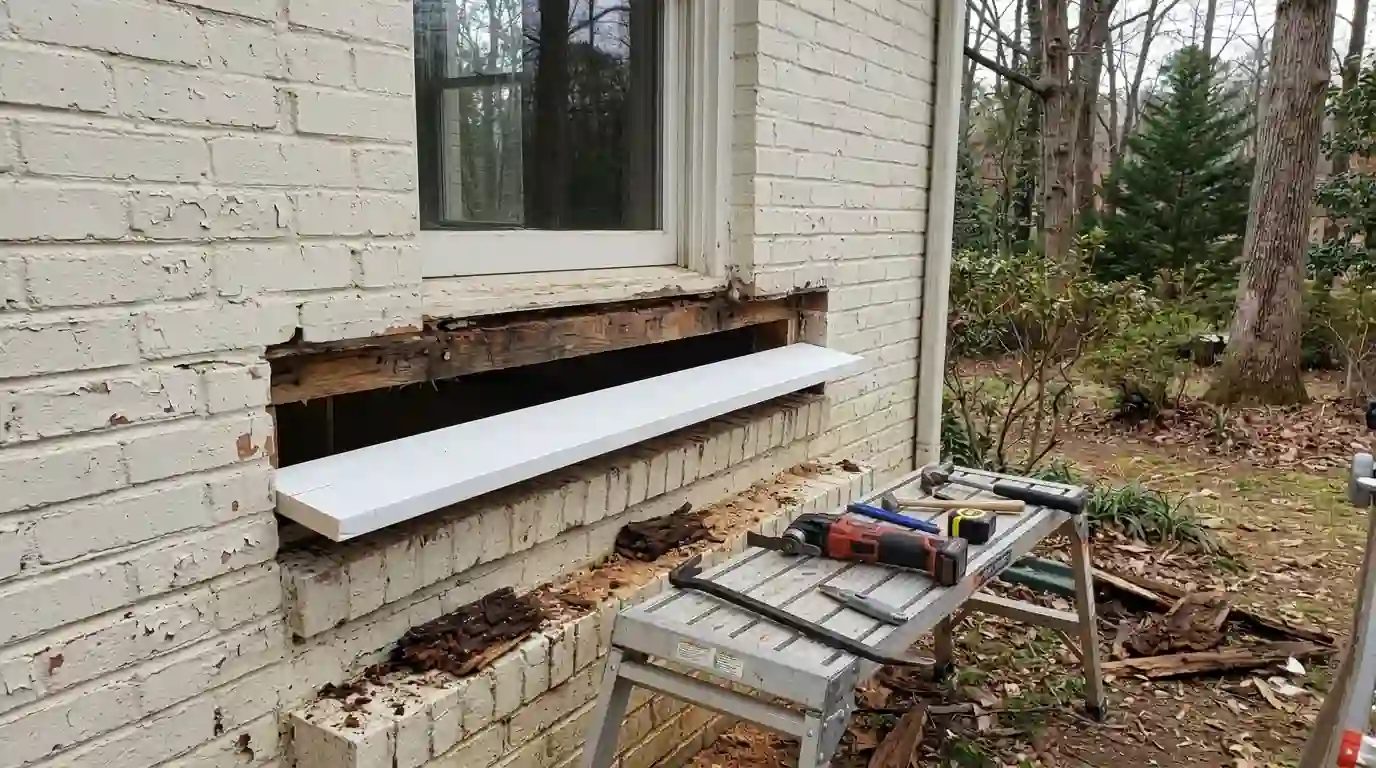
What failing wood looks like on the outside of a house
Bubbling or split paint
Blisters along a sill or fascia often mean water is behind the paint.
Wood that dents under a screwdriver
Sound wood resists; rotted wood lets the tip sink in.
Cracks across the grain
Brown rot breaks drying wood into small cubes.
Open joints
Gaps at miters and butt joints let rain in, and most rot starts there.
Sagging fascia or gutters
A gutter pulling away often means a soft board behind it.
How the job runs
How we find, cut out and rebuild rotted wood
Probe and map
Every suspect board is tested with an awl so the hidden extent is known.
Find the water
Failed caulk, missing flashing or gutter overflow gets noted, or the repair fails.
Cut out the decay
Soft wood is cut back to sound wood; small spots are dug out for epoxy.
Rebuild
New boards are primed on every face before install; epoxy fills small voids.
Prime, caulk and paint
Repairs are primed, joints caulked and the area painted to blend.
Window sills and casings
Sills sit nearly flat, catch rain and shed it toward the wall, so they are often where rot shows first. We probe the sill, the bottom of each casing and the brick mold, because decay travels down a casing into the end of the sill. Small soft areas are dug out, treated with a wood consolidant and filled with two-part epoxy that sands and paints like wood. A sill soft all the way through gets a new nose or a full replacement in primed wood or cellular PVC, shaped to the original.
Fascia and rake boards
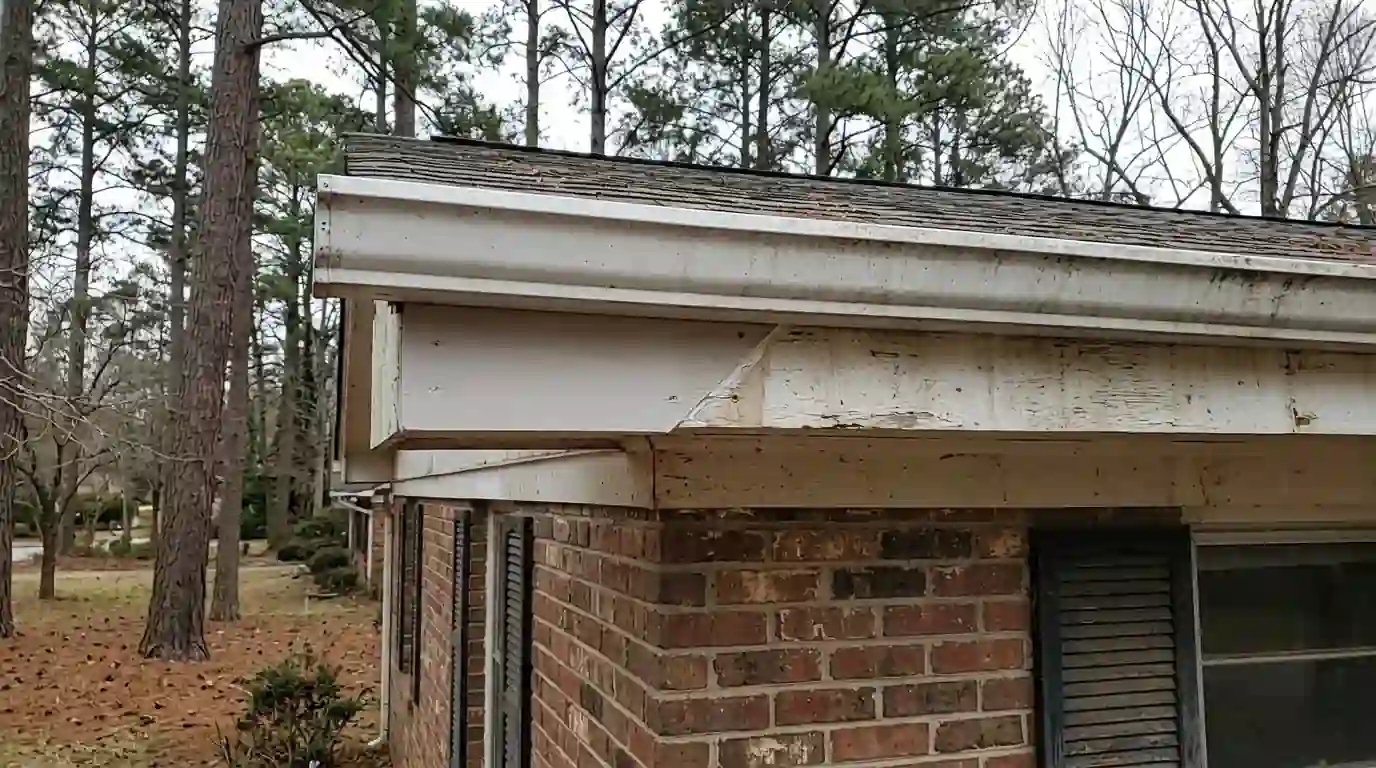
Fascia carries the gutters and catches whatever they spill, so its ends and the corners under downspouts rot first. Rake boards along a gable last longer, but their lower ends sit in gutter splash. We take down the gutter section when needed, cut the rotted length back to sound wood, scarf in a new board primed on every face and rehang the gutter. If the roof edge lacks drip edge or the gutter pitches the wrong way, we tell you, because the new board will rot the same way.
Porch columns and posts
Porch columns rot from the bottom up. Water pools on the floor, wicks into the base of a hollow column or solid post, and stays hidden until the base feels soft or the paint splits. A rotted column base can often be cut off and replaced with a PVC or composite plinth while the column is braced, and shallow rot in a solid post can be rebuilt with epoxy. If a post carries the roof and the decay runs deep, that is structural repair, and we say so plainly instead of hiding it under paint.
Around Atlanta
Atlanta storms and the moisture rot needs
Decay fungi need wood at roughly 20 to 30 percent moisture and grow best between 70°F and 90°F, writes Colin McCown of the American Wood Protection Association. Moisture is the part a house can control. In September 2024, Atlanta took 11.12 inches of rain in 48 hours, its largest 48-hour total since records began in 1878. Rain like that drives water past every open joint and tired caulk line, and the soft spots it leaves can surface months later.
What drives the price
Patch or replace: what a rot repair costs
Rot jobs are priced by how much wood comes out and what it takes to reach it.
Published range: $150 to $250 for patching, $300 to $2,000 for replacement. Source: Angi, national figures, July 2026. A planning figure, not our quote.
How far the decay goes
Rot is usually bigger than the visible spot; probing sets the real scope.
Patch or replace
Epoxy suits small voids; boards soft all the way through get replaced.
Access
Second-story fascia or boards behind gutters take ladders and gutter work.
Custom profiles
Shaped sill noses and molded trim take more shop time than flat boards.
Blending the paint
On older paint, a whole board or run may need a coat to match.
What the job includes
What our rot repair scope covers
Rot repair scopes vary more between painters than paint jobs do. Ours covers:
- Probing every suspect board, not just the visible spot
- Noting the water source and how to stop it
- Cutting decay back to sound wood
- Consolidant before any epoxy fill
- Priming new boards on all six faces
- Matching sill and trim profiles
- Taking down and rehanging gutters as needed
- Caulk after primer, then two finish coats
Questions
Wood Rot Repair questions we hear in Atlanta
Usually not dangerous right away, but it worsens with every rain. A soft post holding up a porch roof is the exception: call right away.
No. Paint traps the moisture and the decay keeps spreading underneath.
Termites leave mud tubes or tunnels along the grain. If we see them, we stop and ask you to have a pest control company treat first.
Both. Cellular PVC will not rot and suits sills and column bases; primed wood copies old profiles.
We take it down and rehang it to reach the fascia, and flag one that leaks.
Yes. Our phones are answered 24/7. Call when you find it and we will set a daylight visit to probe the damage.
Same kind of work
More exterior painting
Exterior House Painting
Siding, trim and brick for ranch and two-story homes.
Brick Painting & Limewash
Mineral paint, limewash or German smear on brick.
Wood & Fiber Cement Siding Painting
Fiber cement, cedar and hardboard lap siding.
Vinyl & Aluminum Siding Painting
Vinyl-safe colors on faded vinyl and aluminum.
Ready when you are
Found soft wood on the house?
Call any hour, day or night. Describe where the rot is and how big it looks, and we will book a visit to probe it and price the repair.