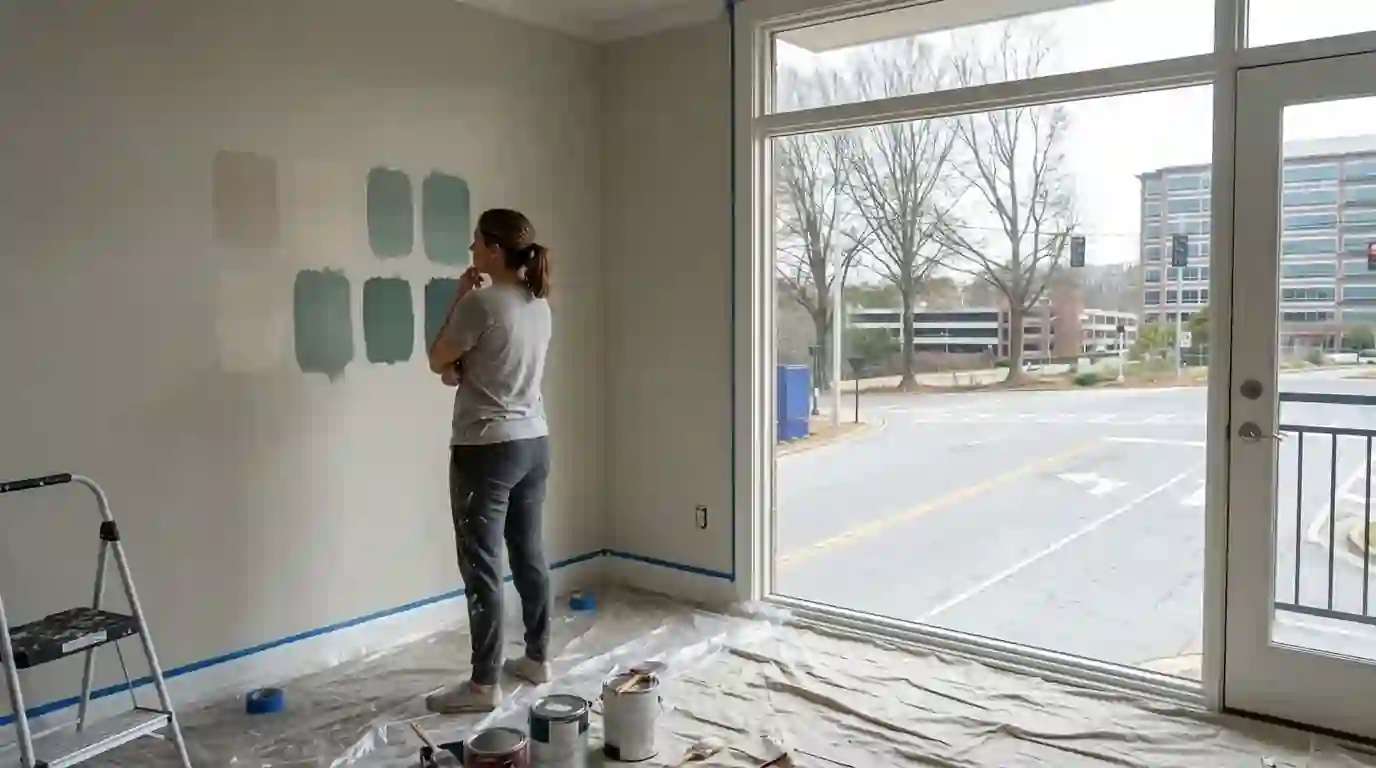
Short answer
On Atlanta brick, the right finish depends first on whether the brick has been painted. Bare brick can take limewash, silicate mineral paint or masonry stain, which soak in. Painted brick usually gets acrylic masonry paint, since Romabio says its limewash cannot go directly over paint. Painting brick runs $1.50 to $4.50 per square foot nationally.
First question: has the brick been painted or sealed?
Limewash, silicate mineral paint and masonry stain all work by soaking into bare, porous brick. Paint and clear sealers block that. Romabio's data sheet for its Classico limewash says the product cannot be applied directly to previously painted surfaces, and KEIM's limewash sheet calls for a bonding primer over old latex or acrylic. KEIM's silicate paint sheet goes further: poorly adhering old paint has to come off.
A quick check tells you where you stand. Splash water on a few bricks on a dry day. If the face darkens and drinks it in, the brick is open and can take a mineral finish. If water beads and runs off, something is sealing the surface, and you need to know what it is before choosing a product.
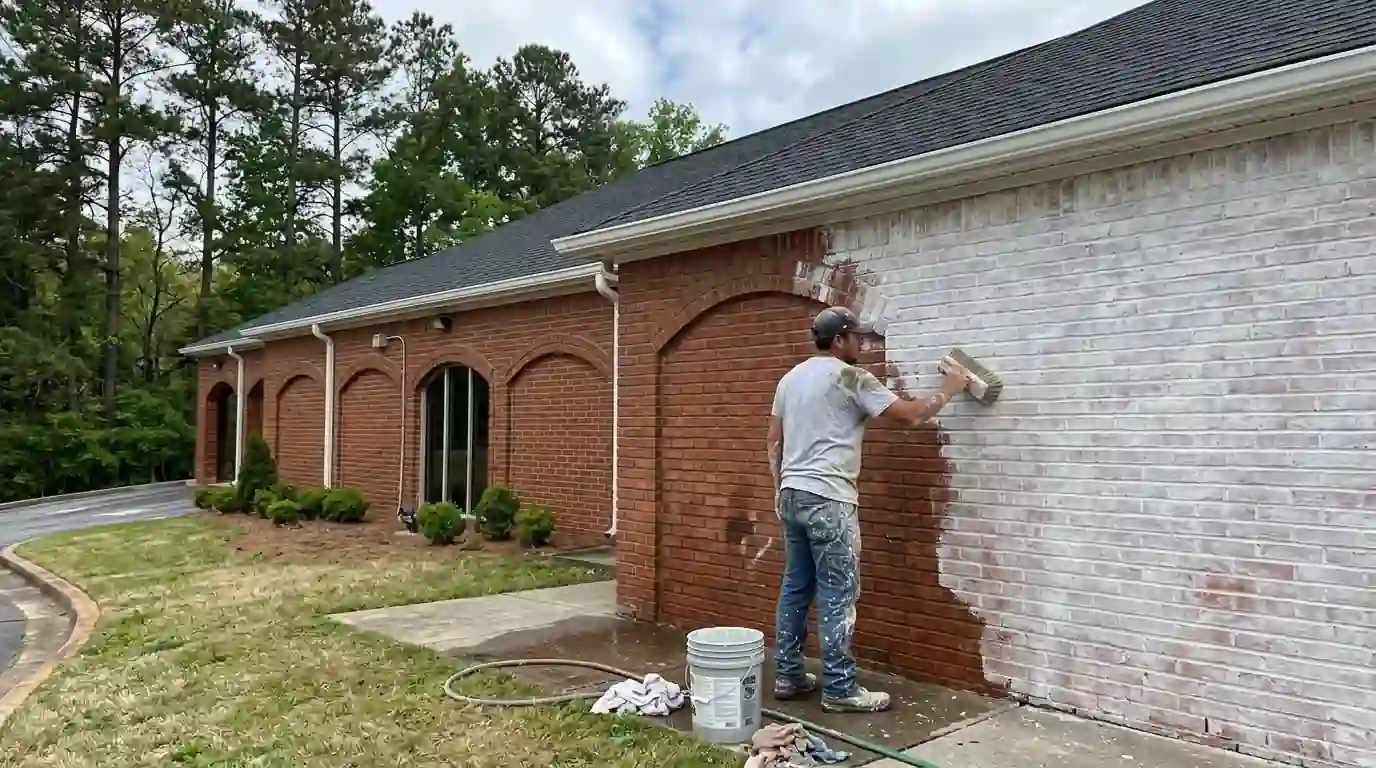
Paint, limewash, mineral paint and stain side by side
| Finish | How it holds | Look | Upkeep | Published cost, national |
|---|---|---|---|---|
| Acrylic masonry paint | A film on the surface | Solid, even color that hides brick and mortar tones | Angi: redo about every 10 years | $1.50 to $4.50 per sq ft |
| Limewash | Soaks in and hardens as the lime cures | Soft, chalky and uneven; can be washed back to show brick | Fades; KEIM says it must be reapplied as the lime weathers | $1.50 to $5.00 per sq ft |
| Silicate mineral paint | Bonds chemically with the brick, per KEIM | Flat, opaque, mineral look | KEIM: lightfast pigments that will not fade | No published range found |
| Masonry stain | Soaks in and recolors the brick | Texture and mortar lines stay visible | HomeAdvisor: 20 years or more | $1 to $4 per sq ft |
Paint is the only one of the four that sits on top as a skin. That is why it hides the most, and why it is the one most likely to peel when moisture gets behind it.
Want a painter to look at your house?
Call (470) 876-1448Limewash: what the data sheets ask for, set against Atlanta weather
Lime is fussy about weather. Romabio asks you to wet masonry thoroughly first, to avoid strong sun and humidity above 80%, and to skip exterior work when storms are possible during drying; its working range tops out at 90°F, with a minimum of 50°F in one section and 55°F in another. KEIM's limewash wants 41°F and rising, under 86°F, two coats with 12 hours between them, and protection from rain for 36 to 48 hours.
On Atlanta's 1991 to 2020 normals, July averages a high of 89°F and is the wettest month at 5.3 inches, which crowds both limits. April and October average highs of 72°F and 73°F with the year's lowest normal rainfall, 3.4 inches each, and those are the comfortable months for lime on brick.
Plan on a test patch. Portola's limewash sheet notes the finish keeps changing for days after it goes on, so judge a patch once it has fully dried, not the same afternoon.
Silicate mineral paint for an opaque color that still breathes
If you want solid white or a solid color but do not want a plastic film over the brick, silicate paint sits between limewash and acrylic. KEIM describes its Granital as a potassium silicate paint that forms a chemical bond with the mineral surface, rated at 80 to 85 perms for vapor permeability, with lightfast pigments it says will not fade. It goes on in two or three coats at least 12 hours apart, between 41°F and 86°F, and needs protection from rain for 12 to 36 hours while it cures.
The catch is the same as with limewash: it wants bare masonry. Over old acrylic that is still tight, KEIM calls for its bonding primer first. Over loose paint, the paint has to be removed.
Masonry stain when you like the texture but not the color
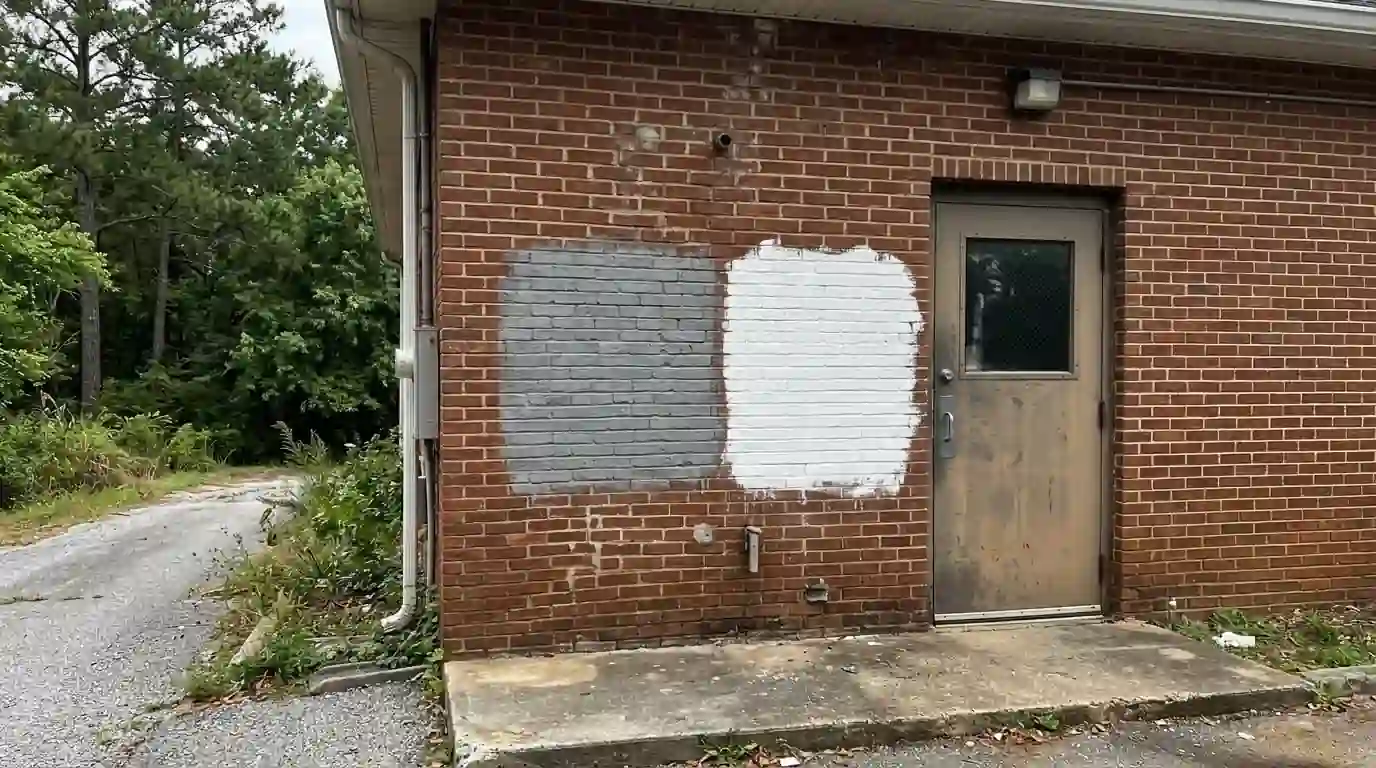
Stain is the quiet option for an orange or salmon brick ranch you would rather see in brown or gray. It soaks into the brick and shifts the color toward brown, gray or a deeper red while the texture and mortar lines stay visible. HomeAdvisor's June 2026 figures put it at $1 to $4 per square foot, about $2.50 on average, or $1,580 to $6,320 for a house with 1,580 square feet of brick wall. It also reports that stained brick can last 20 years or more, that brushing can cost twice as much as spraying, and that each added story raises the price 25% to 50%.
Mortar can be stained with the brick or left alone. Leaving it lighter keeps the pattern of the wall; staining both gives a more even, newer look.
Brick that is already painted: repaint it properly
On brick someone painted years ago, the practical choice is usually another coat of exterior acrylic made for masonry. We wash off mildew and chalk, scrape loose paint, patch cracked mortar joints, prime bare spots and apply two finish coats. Angi's July 2026 figures put painting brick at $1.50 to $4.50 per square foot, or $3,500 to $10,000 for a whole house, with a repaint about every 10 years.
Shade matters here. A Georgia Tech assessment found 45.7% of Atlanta under tree canopy in 2023, and north walls under oaks stay damp long enough to grow mildew, which has to be killed and rinsed off before any coat goes on.
Water problems to fix before coating anything
- White, powdery salts on the face (efflorescence) mean water is moving through the wall. Find the source first.
- Gutters that spill onto the brick, and mulch or soil piled against it, keep the bottom courses wet.
- Cracked or sandy mortar should be repointed so the new finish has something sound to hold.
- Old clear sealers block mineral finishes and need to be identified before a product is chosen.
No coating lasts on a wall that stays wet from the inside.