Short answer
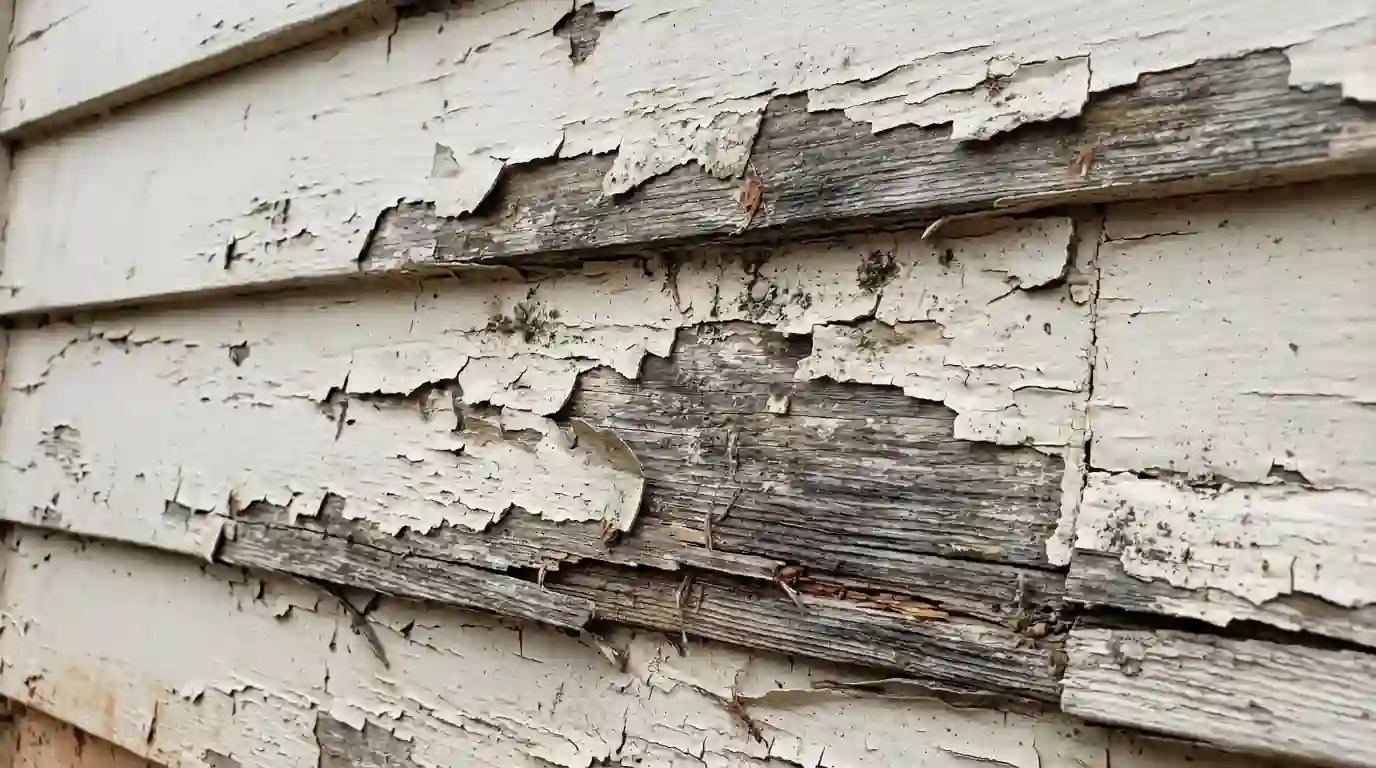
Repainting a 1960s brick ranch around Atlanta starts with lead: EPA says 24% of homes built between 1960 and 1978 have some lead-based paint, so test the old trim or treat it as if it does. Then decide whether the brick stays natural, and expect most of the labor on fascia, soffits, windows and the carport.
Why Tucker and DeKalb have so many 1960s ranches
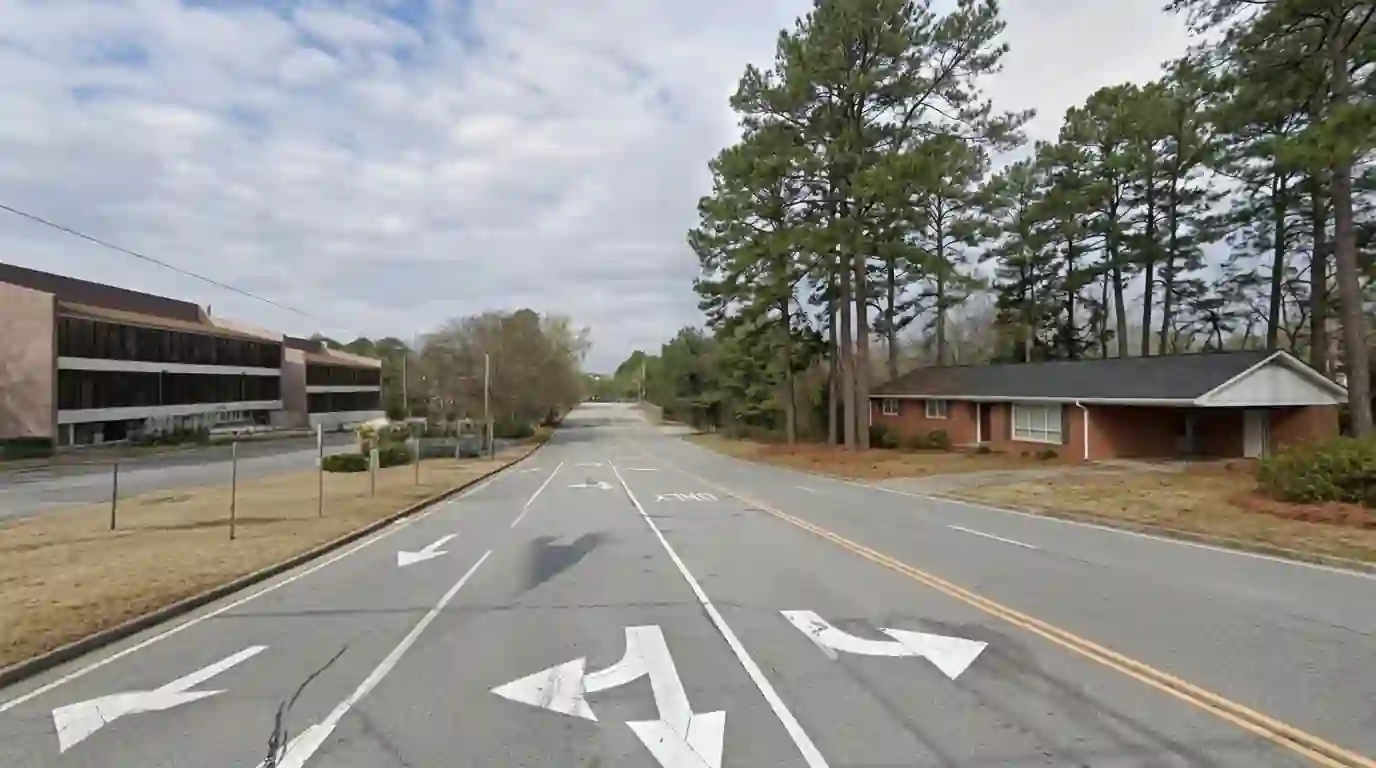
The ranch was post-war Georgia's everyday house. The state Department of Community Affairs ranch house guidelines count more than 175,000 built in Georgia between 1940 and 1960, sheltering about two-thirds of the state's new residents in those years. Tucker followed the pattern. Its downtown grew around the railroad that arrived in 1892, but the biggest housing boom came after World War II, and much of what stands today is ranch and split-level homes from the 1950s to the 1970s, such as a 1963 ranch in Winchester Heights. The city government is far younger than the houses: voters approved incorporation in 2015 and city status began in 2016.
The county numbers point the same way: in the DeKalb County School District area, 26.5% of homes were built before 1970. If you own one, the house is more than half a century old, and the trim has almost certainly been painted many times.
Start with a lead check on the original trim
EPA estimates that 24% of homes built between 1960 and 1978 have some lead-based paint. The odds are lower than for a prewar house, but on a ranch the likely spots are the original wood: window sashes and sills, fascia, door frames, porch and carport trim. Brick that was never painted is not part of the question.
You have three ways to settle it: hire a lead inspector or risk assessor, send paint chips to an accredited lab, or treat the old trim as though it contains lead. EPA urges caution with home test kits. Unless testing rules lead out, once someone is paid to scrape or sand painted surfaces on a pre-1978 house, the federal Renovation, Repair and Painting rule applies: a lead-safe firm, trained renovators, plastic on the ground and a careful cleanup.
Want a painter to look at your house?
Call (470) 876-1448Painted brick or natural brick: a decision you make once
The state guidelines call red brick the signature material of Georgia's ranches, and much of a 1960s house's character rides on it. Painting it is a real choice with a long tail.
| Option | Look | Upkeep | Undo later? |
|---|---|---|---|
| Leave it natural, clean it | Original red with mortar contrast | Occasional washing | Nothing to undo |
| Limewash | Soft and chalky, some brick shows | Wears gradually, can be refreshed | Fades over time |
| Mineral paint or stain | Flat, even color that soaks in | Little peeling | Effectively permanent |
| Masonry paint | Solid, uniform color | Repainting on a cycle like siding | Stripping is slow and expensive |
Whichever you choose, the brick has to be clean and dry, and spalled faces or failing mortar get repaired first. Our brick painting and limewash page covers each finish in more detail.
Long eaves, soffits and the carport take most of the labor
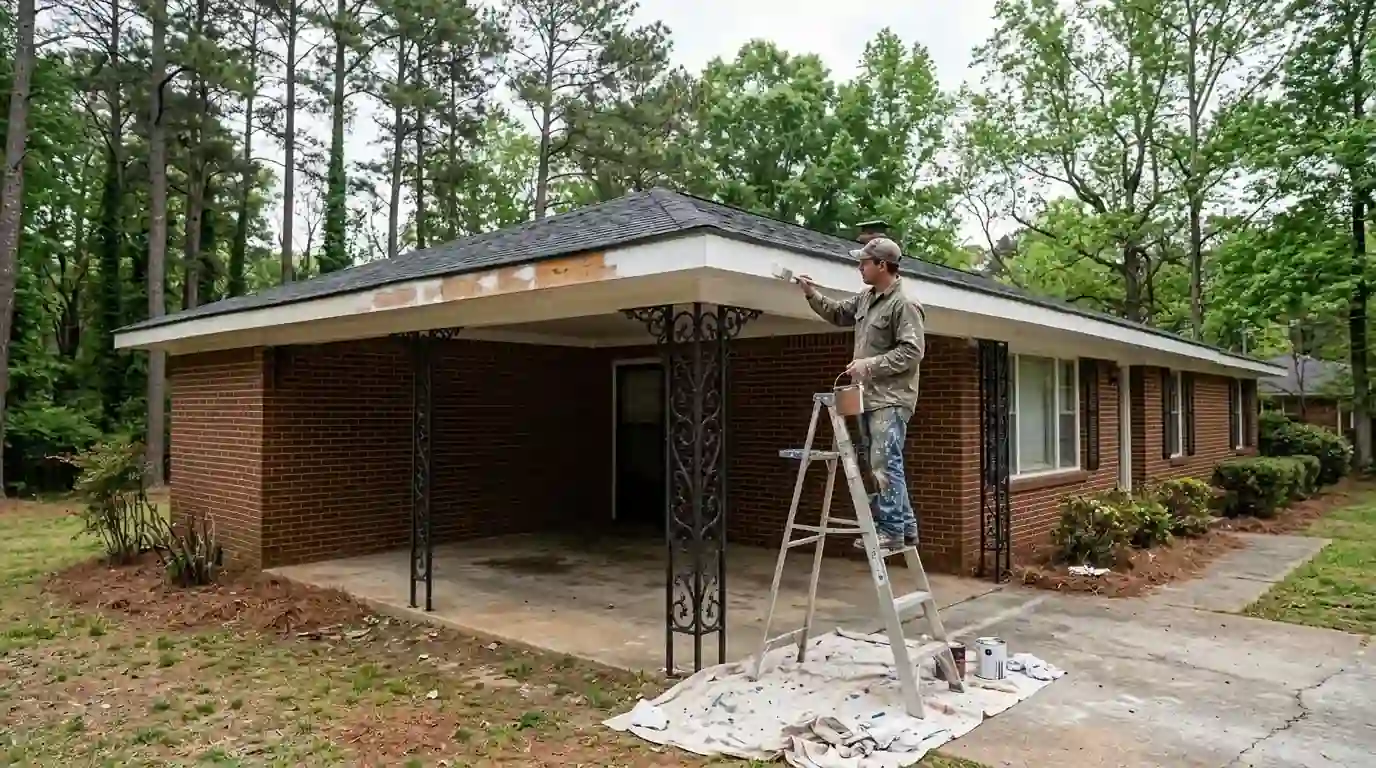
A ranch has little siding and a lot of edge. Projecting eaves, a defining feature in the state guidelines, put long runs of fascia and soffit along every side, and an integrated carport adds a ceiling, beams and posts. That is where the hours go.
- Fascia behind the gutters: probe for soft spots before anyone primes; the ends near downspouts usually go first. Soft boards call for wood rot repair.
- Plywood soffits: they delaminate when they stay wet, and loose plies get cut out and replaced.
- Soffit vents: clean and paint them without clogging the openings.
- Carport ceilings: a light color brightens the space and shows a roof leak early.
- Decorative metal posts: wire-brush the rust and spot prime with a rust-inhibiting primer before topcoats.
Picture windows, wood sashes and the front door
The broad picture window flanked by smaller operable windows is another hallmark in the state guidelines, and on an original house it means a lot of wood and glazing putty. Cracked putty lets water into the sash, so reglazing comes before paint, and fresh putty needs time to skin over before it is coated.
If the windows have been replaced with vinyl, leave the frames alone unless the maker allows paint, and keep very dark colors off vinyl, which can warp in the sun. The front door, often set under a shallow porch on these houses, is the one place to spend some boldness.
Colors that suit a long, low house
A ranch reads horizontally, and color can either respect that or fight it.
- Judge trim colors against the brick, not against a chip on white paper. Red brick carries orange and brown undertones that make stark whites look blue.
- Keep to body, trim and one accent. More colors chop a long facade into pieces.
- Trim close to the shingle color lets the eaves recede; a light trim outlines the roofline.
- Board-and-batten or lap siding on the gable ends can take the trim color or a deeper tone that ties into the brick.
When the choice stalls, a color consultation with painted samples on the actual brick usually settles it.
Inside: paneling, old oil trim and hardwood floors
Interior work on a house this age has its own surprises. Wood-paneled dens can be painted after cleaning, scuff-sanding and a bonding primer, though once paint covers the grain it is there to stay. Original trim may carry oil-based paint under later latex coats, and latex over glossy oil peels unless the surface is deglossed and primed. Many of these houses also have hardwood floors, so we cover them with drop cloths and tape paper along the baseboards before the first sanding pass.