Short answer
Before hiring a painter in Atlanta, get a written scope naming surfaces, prep, paint line and coats; ask for insurance certificates sent by the agent; agree on a payment schedule; and for a home built before 1978, confirm the firm holds lead-safe certification. Georgia's consumer protection office lists painters among trades the state does not license.
Get the scope written down, surface by surface
A painting quote is only as useful as its list of what is included. Ask the painter to name every surface: walls, ceilings, trim, doors, closets, siding, soffits, shutters, railings. Then ask what is left out. Closet interiors, the garage, the back side of a fence and the inside of door jambs are where spoken promises and written quotes tend to drift apart.
- Colors and sheens by surface, or the date by which you will choose them.
- Who moves furniture, takes down curtains and removes outlet covers.
- How extra work found mid-job is priced and approved in writing before it starts.
- The cleanup standard at the end of each day and at the finish.
Ask exactly how the surfaces will be prepared
Prep is where quotes differ most, so carry these questions into every walk-through and listen for specifics.
| Question | A useful answer names | A vague answer sounds like |
|---|---|---|
| How will you clean the surfaces? | Soft wash or hand wash, mildew treatment, drying time | We will clean it up |
| What happens to peeling paint? | Scraping, sanding the edges, spot priming bare spots | We will paint over it |
| How do you handle cracks and gaps? | Which joints get caulk and which get filler | Caulk as needed |
| What if you find rotten wood? | Per-board or hourly pricing, your approval first | We will take care of it |
| How do you protect floors and plants? | Drop cloths, plastic, masking, covered beds | We are careful |
Want a painter to look at your house?
Call (470) 876-1448Products: ask for the paint line, not just the brand
Each paint maker sells several lines at very different quality levels, so a quote that names only the brand tells you little. Ask for the product line and sheen for each surface, whether primer is included and where, and how many finish coats are planned. If you would rather buy the paint yourself, settle that before the quote is written, because it shifts responsibility for quantities and returns. At the end, ask for leftover paint labeled by room and color; touch-ups a year later depend on it.
Insurance certificates and who will be at your house
Ask for a certificate of insurance showing general liability and workers' compensation, sent to you directly by the painter's insurance agent, with your name and address listed as certificate holder. Check that the policy dates cover the job. Georgia's State Board of Workers' Compensation says any business with three or more workers, including regular part-time workers, must carry workers' compensation, and the Board's website has a lookup for verifying an employer's coverage.
While you are at it, ask who will be on site each day, who your contact is when something goes wrong, and whether any part of the job will be handed to another company.
Lead-safe rules if your home was built before 1978
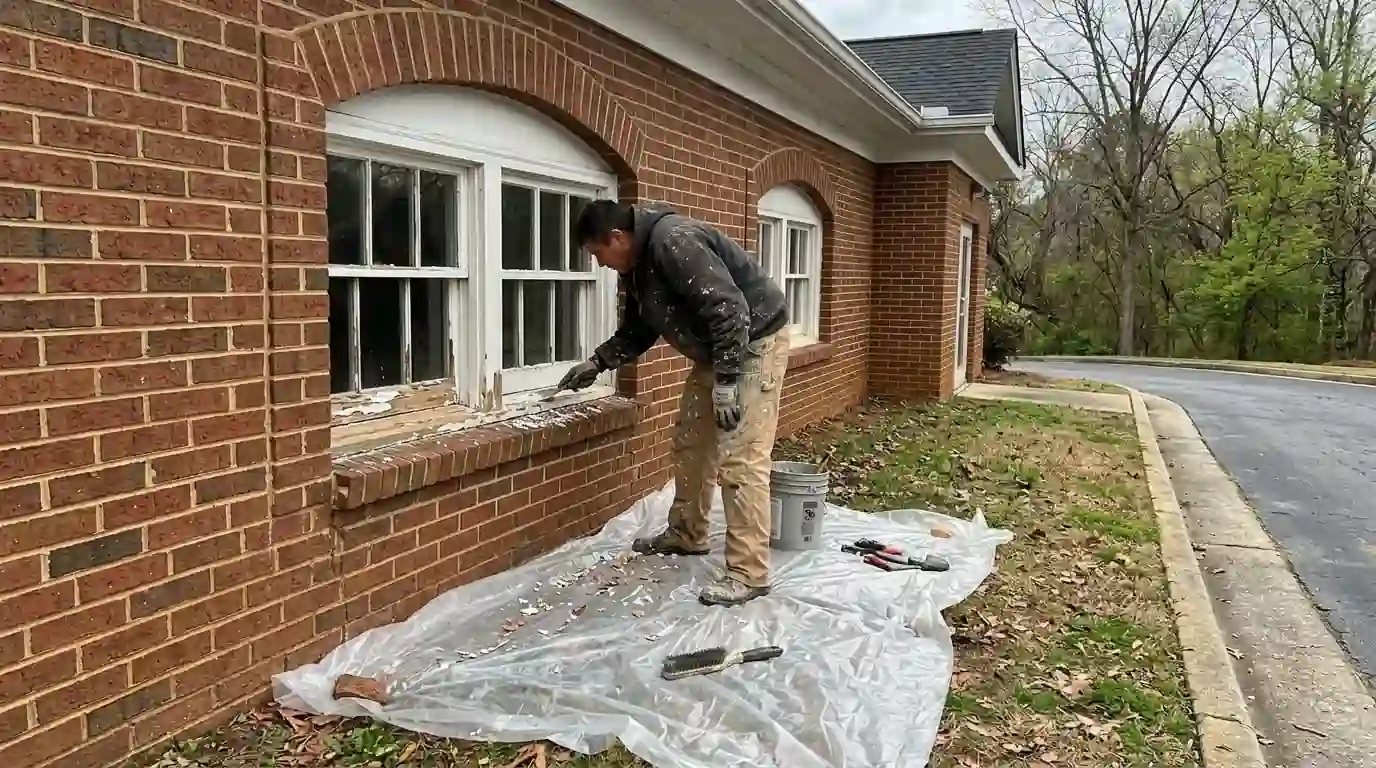
This comes up often here: in the DeKalb County School District area, 26.5% of homes were built before 1970. Under EPA's Renovation, Repair and Painting rule, anyone paid to disturb painted surfaces in a pre-1978 home must work for a lead-safe firm using trained renovators. Georgia's Environmental Protection Division runs that program in this state, so the firm and its renovators need Georgia certification. The rule kicks in once work disturbs more than 6 square feet of lead-painted surface in a room or more than 20 square feet outside, and the renovator must hand you EPA's lead pamphlet before work starts.
- Ask to see the firm's Georgia lead-safe certification and the renovator's training credential.
- Ask how dust will be contained: plastic sheeting, closed doors, ground covers outdoors.
- Ask how the area is cleaned and checked at the end.
The rule does not cover homeowners working on their own homes, but the dust is the same, so the precautions are worth copying.
What Georgia's contractor license covers, and what it does not
Georgia does not issue a state license for painting. The state's consumer protection office lists painters, along with roofers, drywall contractors and repair handymen, among specialty occupations the state does not license, and the Secretary of State's contractor FAQ says licenses are not required for work that qualifies as a specialty trade.
The state license is for residential and general contracting. Since July 1, 2008, Georgia law has required a current license to engage in that business, and the code defines a residential contractor by residential work whose total value exceeds $2,500. If a painting job grows into structural repair, such as rebuilding porch framing or replacing a rotten support post, ask who will do that part and under what license. Any state license can be checked on the Secretary of State's Licensee Search. Cities and counties also run their own business licensing, so your local government can tell you what applies where you live.
A payment schedule that protects both of you
Agree on payment terms before work starts and put them in the written agreement. A common structure is a deposit to hold the dates and buy materials, a progress payment on larger jobs tied to a finished stage, such as the body coats on an exterior, and the balance after a final walk-through. Avoid paying the full price before the work is done.
- Pay by check or card so there is a record.
- Do the final walk-through in daylight and write the punch list together.
- Ask what the painter will do if paint peels early or lands on the wrong surface, and get that answer in writing.